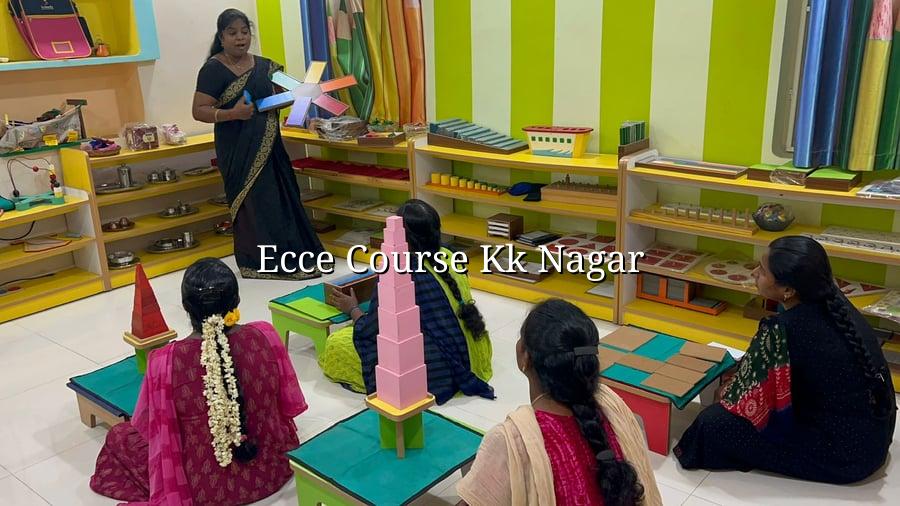
ECCE course KK Nagar is a practical choice if you want preschool teacher training that builds real classroom confidence, not just theory. At Super Star Montessori Teacher Training Institute, the focus is on child-centered learning, activity planning, and age-appropriate teaching methods that help you step into an early childhood classroom with clarity.
This page explains who the course suits, what you learn, how the training structure works, and how it connects to preschool jobs in Chennai. If you are comparing options for ECCE training near KK Nagar, you will also see how the program aligns with Montessori-based classroom practice and supported career pathways.
A strong ECCE course should help you understand how young children grow, learn, speak, move, and respond to their environment. For that reason, training has to combine child development, lesson planning, classroom routines, and hands-on practice with teaching materials. In a preschool setting, those skills matter as much as subject knowledge because children learn through structure, repetition, movement, and guided activity.
At Super Star Montessori, the training approach is shaped for learners from KK Nagar, Ashok Nagar, Kodambakkam, Virugambakkam, and nearby Chennai neighbourhoods who want a realistic pathway into early childhood education. The content is useful whether you are starting fresh, returning to work after a break, or looking to move from assistant roles into full preschool teaching responsibility.
Preschool classrooms are active spaces where a teacher may move from circle time to phonics, from rhyme recitation to practical life activities, all within the same session. An ECCE course becomes valuable when it teaches you how to observe children, manage transitions, and keep learning focused without making the room feel rigid. During training, you should practice storytelling, worksheet planning, art work, and simple material handling so that your methods feel natural when you enter a real classroom in Chennai.
Many learners assume preschool teaching is only about singing songs and keeping children busy, but real teaching needs structure. A useful program explains why a child may respond differently at three, four, or five years of age, and how activities should change across those stages. When the course includes classroom observation, demo lessons, and guided feedback, you can build confidence faster and avoid common mistakes like over-explaining, using unsuitable worksheets, or skipping routine-building.
| Training Area | What You Learn | Classroom Outcome |
|---|---|---|
| Child Development | Stages of growth, behavior, learning readiness, and age-appropriate expectations | Better understanding of how to guide young children with patience |
| Language Activities | Rhymes, storytelling, phonics readiness, conversation practice, and vocabulary building | Stronger support for early communication and listening skills |
| Pre-Math Foundations | Sorting, counting, matching, sequencing, and simple number awareness | Children begin to connect learning with concrete objects and patterns |
| Practical Life Work | Pouring, folding, spooning, buttoning, cleaning, and self-help routines | Improved independence, concentration, and coordination in class |
The best outcome of ECCE training is not memorizing methods but learning to make sensible teaching choices in daily classroom life. You should finish the course with the ability to prepare a simple timetable, plan theme-based lessons, and understand how to manage group activity, individual attention, and free play. These are the skills that help teachers feel settled when they begin working with preschool children.
In Chennai, many preschool classrooms value teachers who can balance warmth with structure. That means knowing when to encourage, when to redirect, and when to repeat an activity so a child can absorb the lesson at a comfortable pace. A course built with that reality in mind becomes useful for job interviews, trial classes, and actual teaching duties.
One common mistake is choosing a course only because the title sounds familiar, without checking whether it includes guided practice. Another is assuming a preschool teacher needs only creativity; in reality, observation, planning, language handling, and child safety awareness are equally important. Learners also sometimes ignore the value of feedback, but that feedback is what helps you improve your tone, pacing, and classroom presence.
This kind of training suits fresh graduates, homemakers returning to work, school staff who want to move into early childhood roles, and anyone who wants a stable teaching-related career path. It is also useful for learners from KK Nagar who prefer a Chennai-based institute with a structured method, practical sessions, and clear guidance on next steps after training. If you want a broader qualification route later, the foundation from ECCE can also support your move toward related preschool or Montessori programs.
Super Star Montessori Teacher Training Institute offers preschool-focused learning that connects ECCE basics with authentic Montessori practice, classroom observation, and hands-on teaching methods. If you are comparing our courses, you can also explore the online program for flexible study, or look at internship training for real classroom exposure in Chennai. The goal is to help you move from interest to practical readiness with the right support at each stage.
Call +91 90924 63091 or +91 86680 47390, email info@superstarmontessori.com, or chat on WhatsApp.
ECCE course KK Nagar is designed for learners who want a foundation in early childhood education and preschool teaching. It suits fresh graduates, working women, and support staff who want to build classroom skills for nursery and kindergarten environments. The course is especially useful if you want practical training that connects child development with real teaching work.
Yes, ECCE training is useful because many preschools expect teachers to understand child behavior, routines, and age-based activities. Chennai schools often look for teachers who can manage songs, stories, early literacy, and activity planning with confidence. A structured course can prepare you for that environment more effectively than self-study alone.
Most useful ECCE training covers child growth and development, classroom organization, language activities, pre-math readiness, art, and practical life tasks. Good programs also include observation, lesson planning, and basic communication skills for preschool settings. The focus should be on helping you handle real teaching situations, not only theory notes.
Yes, many learners begin without any teaching experience. ECCE training is meant to build your foundation from the ground up, starting with how children learn and how a teacher supports that learning. With guided practice and feedback, beginners can gradually develop the confidence needed for classroom work.
Super Star Montessori emphasizes hands-on learning, practical classroom practice, and guided training so learners can understand how preschool teaching works in real settings. Depending on the program chosen, learners can also explore internship-related exposure and material-based workshops. That practical side is important when you are preparing for preschool teaching roles.
Your choice depends on the age group and teaching style you want to work with. ECCE is a broad early childhood foundation, Montessori focuses on child-led learning and materials, and NTT is often aimed at nursery-level teaching skills. If you are unsure, speaking with a counselor can help you match the course to your goals.