Ecce course Koyambedu is a practical route for anyone in North Chennai who wants to build a career in early childhood education with real classroom confidence. If you are comparing courses, this page helps you understand what the training covers, how the learning happens, and what support you can expect after admission.
This guide is written for fresh graduates, career changers and parents who want a serious teacher-training option near Koyambedu and nearby areas such as Anna Nagar, Mogappair and Ambattur. You will see how an ECCE pathway connects with Montessori practice, nursery teaching skills, classroom observation and internship support at our Chennai campus.
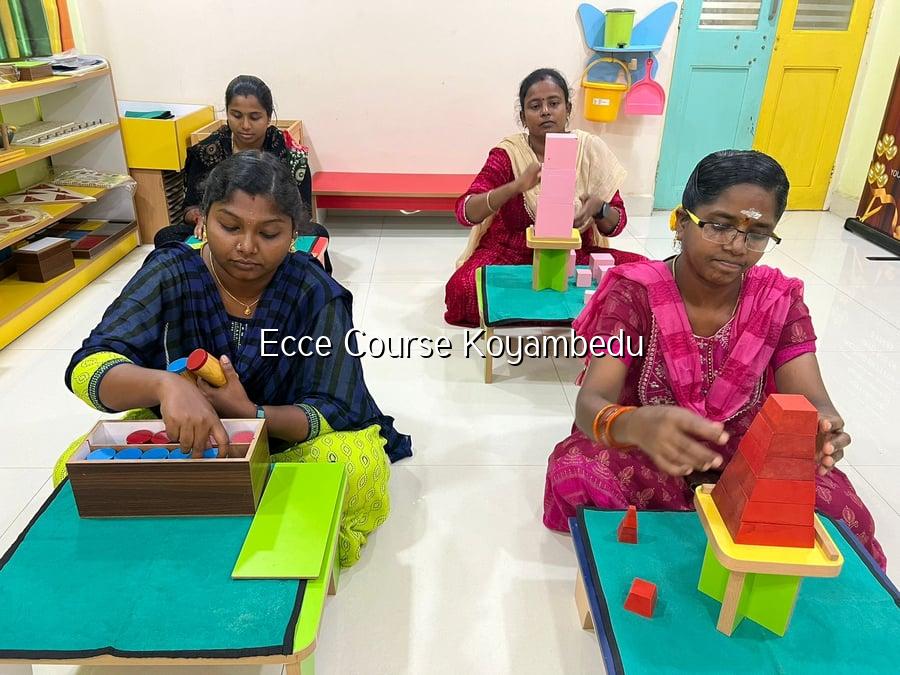
An effective ECCE course should do more than explain child development theory. It should help you handle real preschool classrooms, plan age-appropriate activities, and communicate with young children in a calm, respectful way. At Super Star Montessori, the training approach blends foundational theory with hands-on material work, so the learning feels connected to the work you will actually do in a preschool or kindergarten setting.
In early childhood classrooms, children learn through movement, repetition, songs, stories and carefully prepared materials. That means a trainee must learn how to present activities, observe responses, and adjust the lesson based on the child’s pace. In our Chennai campus environment, this kind of practice is paired with guided observation so trainees can see how practical life, sensorial work, language and early numeracy are introduced with patience and structure.
People searching for ecce course Koyambedu often want a nearby program that fits their schedule and gives them a credible entry into teaching. Some are new to the field and want a job-ready foundation; others already work in schools and want to strengthen their classroom method. A strong ECCE program should support both weekday and weekend learners, and it should also connect them to internship exposure, interview readiness and continuing guidance after completion.
| Training focus | What you learn | Best for |
|---|---|---|
| Child development basics | Stages, needs, behaviour and respectful guidance | Beginners entering early childhood education |
| Montessori methods | Practical life, sensorial, language and early maths activities | Students who want classroom-ready teaching skills |
| Nursery classroom practice | Rhymes, stories, routines, activity planning and observation | Teachers aiming for preschool and nursery roles |
| Career support | Internship exposure, mentoring and interview preparation | Learners who want guidance after course completion |
Many learners start with the idea that early childhood education is mostly about singing songs and keeping children busy. The better training courses show something more demanding: how to guide a child toward independence, how to use language that builds trust, and how to prepare the environment so learning feels natural. That is why a serious ECCE program needs a balance of theory, demonstrations and supervised practice.
At a quality institute, trainees are also introduced to the habits that schools value every day: punctuality, classroom organisation, clear communication and observation-based planning. These are the details that help a trainee move from “I have studied this” to “I can handle a real classroom with confidence.” For students around Koyambedu, that distinction matters because many preschools and kindergartens expect practical readiness from day one.
One common gap is overreliance on slides and notes without enough activity work. Another is skipping classroom observation, which leaves trainees unsure how children actually respond to instruction. A strong teacher-training experience corrects both by making the learner handle materials, practise presentation steps and reflect on how children engage with each activity.
Although ECCE is broader than Montessori alone, the best programs borrow the strengths of Montessori pedagogy: respect for the child, prepared environments and hands-on learning. Nursery teaching then adds the routines, songs, story time and interactive classroom rhythm that younger children enjoy. When these approaches are taught together, graduates are better prepared for preschool, kindergarten and early learning centres in Chennai.
If you are comparing an ecce course Koyambedu with other nearby options, Super Star Montessori can help you choose a training route that matches your goals and schedule. Our programs include Montessori teacher training, Nursery Teacher Training, Kindergarten Teacher Training, online learning, practical workshops and internship support, so you can build both theory and classroom confidence. Explore our courses or check the online program if you need a flexible learning mode, then speak with our team for guidance on the right fit.
Call +91 90924 63091 or +91 86680 47390, email info@superstarmontessori.com, or chat on WhatsApp.
The best option is one that combines child development theory with practical classroom work and observation. Beginners usually benefit most from a program that also explains Montessori methods, nursery routines and activity presentation in a structured way. That balance makes it easier to move into preschool teaching with confidence.
Duration depends on the institute and the format you choose. Some learners prefer a longer, more detailed route with practical sessions, while others look for a schedule that fits weekday or weekend study. The key is to choose a course that gives enough time for real practice, not just theory completion.
Yes, many learners from Koyambedu, Anna Nagar, Mogappair and nearby neighbourhoods look for Chennai-based training because it is easier to attend regularly. If commuting matters, check whether the institute offers weekday, weekend or online support. That flexibility can make consistent learning much easier.
Yes, ECCE training is designed to support early childhood roles such as preschool teacher, nursery teacher and assistant educator. A strong course should build practical classroom skills, communication confidence and understanding of child behaviour. Career support and internship exposure can also help you prepare for interviews.
Look for child observation, activity planning, storytelling, rhymes, classroom organisation and material handling. You should also learn how to speak to children with patience and guide them toward independence. These are the everyday skills that matter most in real early years classrooms.
Yes, ECCE can be a strong starting point because it builds a foundation in child development and classroom practice. If you later want deeper Montessori exposure, the transition is smoother when you already understand observation, sequencing and hands-on learning. That is why many learners begin with an early childhood course and continue into specialised training.