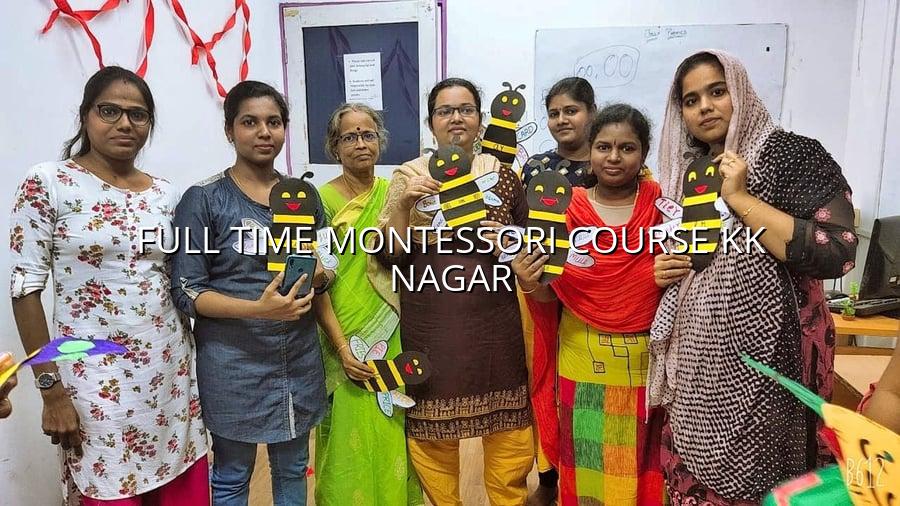
Full time Montessori course KK Nagar seekers usually want a serious, hands-on path into teaching, and this page shows exactly what to expect before you enroll. If you are aiming to build classroom confidence, understand authentic Montessori methods, and prepare for real school settings in Chennai, this guide is for you.
At Super Star Montessori, full-time study is designed for learners who want focused practice, structured observation, and steady progress through practical life, sensorial, language, mathematics, and cultural work. You will also see how the Chennai campus supports nearby learners from KK Nagar, T Nagar, Porur, and other neighbourhoods with a training model that balances theory, material work, and career support.
A strong Montessori course does more than explain child development. It trains you to present materials correctly, observe children with purpose, and manage a prepared environment that feels calm and purposeful. In a full-time format, that learning happens with enough repetition for habits to form naturally, which matters when you later step into a preschool or Montessori house in Chennai.
Many beginners can read about Montessori philosophy, but they need time to translate ideas into action. A full-time schedule gives you regular classroom exposure, guided practice, and immediate feedback on how to set up activities, sequence lessons, and communicate with young children. For learners from KK Nagar, that consistent rhythm is often easier to build into a focused career plan than a scattered part-time routine.
Authentic Montessori training should help you handle real classroom tasks, not just exam preparation. That includes arranging practical life exercises, using sensorial materials with accuracy, introducing language and math materials step by step, and learning how to watch children without interrupting their concentration. When you understand those routines, you are better prepared for classrooms across Chennai, whether the setting is a preschool, kindergarten, or Montessori environment.
| Training Element | What You Learn | Why It Matters |
|---|---|---|
| Theory sessions | Montessori principles, child development, and classroom preparation | Builds the foundation for meaningful teaching decisions |
| Material practice | How to present and repeat Montessori materials accurately | Helps you teach with confidence and consistency |
| Observation work | How to watch child behaviour and record learning cues | Improves lesson timing and individual support |
| Career support | Guidance for internship, school readiness, and interview preparation | Helps you move from training into real classroom opportunities |
This path suits learners who want concentrated study and can commit to regular training hours. It is also useful if you prefer learning by doing, because the Montessori approach becomes clearer when you repeat presentations, handle materials, and receive corrections in real time. Many aspiring teachers from KK Nagar choose this route when they want to move quickly from interest to readiness without losing depth.
If you are comparing options, think about how you learn best. Some people do well with occasional online study, while others gain more from daily practice and in-person guidance. A full-time course often works well for the second group, especially when they want hands-on exposure to classroom routines and a steady training environment in Chennai.
Good training helps you prepare the room so children can move independently and stay engaged. You learn how to organize shelves, rotate materials, and keep the environment orderly so each activity has a clear purpose. In real schools, that kind of preparation makes the classroom feel calm and easy for children to navigate.
Montessori teaching depends on precision. You do not rush through a lesson; you demonstrate slowly, let the child observe, and give space for repetition. That simple structure is powerful because it encourages independence instead of dependence, which is one of the biggest differences between Montessori practice and ordinary lecture-style teaching.
When your training is full time, you have more opportunities to refine these habits. A small correction in hand movement, pacing, or explanation can change the quality of the entire presentation, so repeated guidance is valuable. This is why serious learners often search for a full time Montessori course KK Nagar option that offers practical depth, not just a certificate-oriented classroom.
Super Star Montessori offers structured Montessori teacher training with practical exposure, internship support, and career mentoring for learners who want a serious teaching pathway in Chennai. If you are comparing Montessori, NTT, KTT, or online learning, our courses page helps you review the options, and the online program is useful if you need flexible study. We also support learners with classroom practice and guidance that fits real school expectations, making it easier to move forward with confidence.
Call +91 90924 63091 or +91 86680 47390, email info@superstarmontessori.com, or chat on WhatsApp.
Yes, a full-time format is often a strong choice for beginners because it gives you regular practice and guided correction. Instead of learning only the theory, you spend time with materials, lesson flow, and classroom routines until they feel familiar. That is especially helpful if you want to start teaching in Chennai after training.
You learn Montessori philosophy, child development, classroom preparation, material presentation, and observation techniques. A good course also includes practical life, sensorial, language, mathematics, and cultural work. These areas help you understand both how children learn and how to guide them with confidence.
Full-time training usually gives you more in-person practice, quicker feedback, and direct classroom exposure. Online learning can still be useful, especially if you need flexibility, but some learners understand Montessori methods better when they can handle materials in person. The right choice depends on how much structure and face-to-face practice you want.
Yes, internship support is an important part of many strong Montessori training pathways. It helps you observe real classrooms, practice under supervision, and understand how teachers manage children day to day. That bridge from training to internship often makes the move into a school setting much smoother.
Not always. Many learners join Montessori training as fresh entrants, career changers, or parents who want to understand early childhood education better. What matters most is interest in child-centred learning, patience, and the willingness to practice new teaching methods consistently.