Montessori teacher training with internship Puzhal is the right search when you want real classroom exposure, not just theory. At Super Star Montessori in Chennai, the learning path combines Montessori methods, guided practice and internship experience so you can step into a preschool environment with more confidence.
This page explains how internship-based training works, what skills you build during observation and practice, and how the Chennai campus supports learners from Puzhal and nearby areas. If you are comparing Montessori, NTT and other early childhood programs, you will also see where practical training matters most and how to plan your next step.
Many learners start with an interest in teaching, but the first classroom can feel very different from the course brochure. Internship-based Montessori training bridges that gap by helping you observe children, prepare materials, assist with activities and understand how a Montessori environment flows through the day. For candidates from Puzhal, the advantage is simple: you can study in Chennai and still gain hands-on exposure that mirrors real preschool routines.
Montessori teaching is built on careful observation, patient guidance and prepared materials, so practice matters as much as lesson notes. During internship, you see practical life work, sensorial exercises, language activities, mathematics materials and cultural learning in action. That experience helps you understand how to guide a child without interrupting concentration, how to set up the environment, and how to respond when a child needs support at a different pace.
Most prospective students ask whether the internship is only observation or active participation. The better answer is that quality training should include both. You observe how a classroom is managed, and you also get supervised chances to assist with material presentation, classroom organization, storytelling and age-appropriate interaction. That makes the transition from learner to teacher much smoother, especially if you are aiming for preschool roles in Chennai neighborhoods such as Kolathur, Anna Nagar, Ambattur or Mogappair.
| Training Part | What You Learn | How It Helps in the Classroom |
|---|---|---|
| Montessori Theory | Core philosophy, child development and classroom structure | Helps you understand why each activity is introduced in a specific way |
| Material Work | Presentation and handling of practical life, sensorial and academic materials | Builds accuracy and confidence before you work with children |
| Internship Observation | Watching live classroom routines, teacher flow and child response | Shows how a Montessori environment operates during a normal school day |
| Supervised Participation | Assisting with activities, preparation and teacher support | Helps you apply what you learned in a real setting with feedback |
A strong internship does more than add a line to your resume. It teaches timing, classroom language, material placement and the rhythm of working with young children. Instead of only memorizing methods, you begin to notice how children respond to repetition, independence and gentle correction. That practical awareness becomes valuable when you handle real preschool groups after training.
For students comparing learning options, this is where internship training stands out from a purely lecture-based course. You are not learning in isolation; you are seeing how the Montessori environment is arranged, how the teacher prepares before children arrive and how transitions happen during the day. If you live in or near Puzhal, that real-world exposure can save time later because you already understand what schools expect from a classroom-ready trainee.
Certificates matter, but they work best when backed by practice. Some learners enroll in a course expecting instant confidence after finishing theory, then struggle during interviews because they have not handled actual classroom materials or observed child behavior closely. A training route that includes internship support gives you a more balanced foundation, so your answers in interviews sound practical rather than copied from notes.
Keep a small reflection notebook during your internship period. Write down what materials were used, how the teacher introduced them, what kind of guidance helped the child and what questions came up during observation. These notes become useful for revision, demo planning and self-assessment, especially if you want to move into preschool teaching, assistant teaching or later special classroom support.
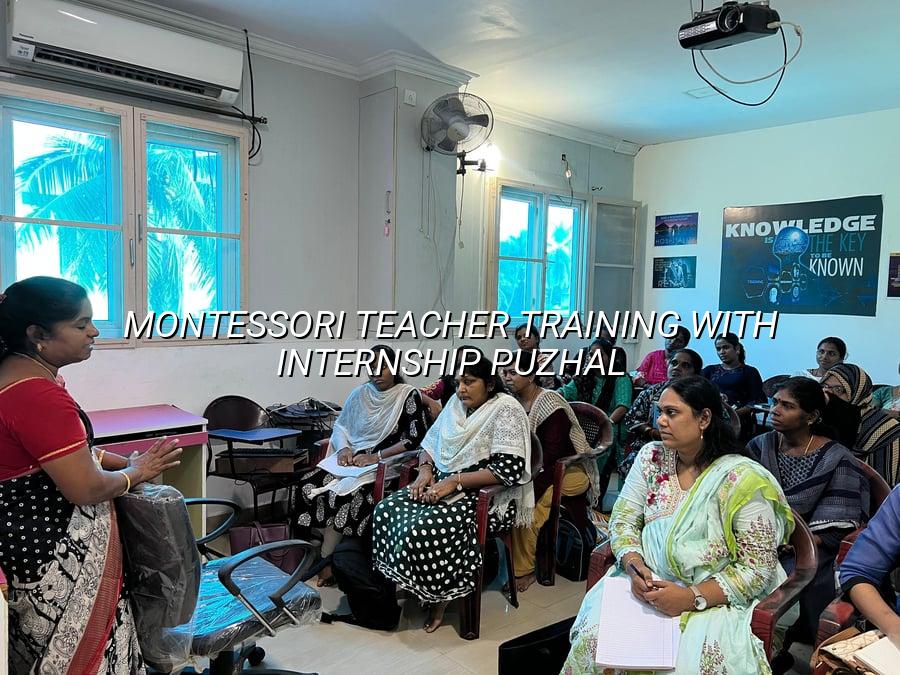
This pathway suits fresh graduates, homemakers returning to work, preschool assistants who want formal training and anyone who prefers learning by doing. It also works well for those who want to understand the difference between Montessori practice and conventional classroom teaching before applying for jobs.
Weekend, weekday, fully online and hybrid batches can help different schedules, but the key is to ensure your program includes practical exposure and placement mentoring. For many learners in Chennai, that means asking whether the institute supports internship training through partner preschools and whether the guidance is structured rather than informal.
Super Star Montessori Teacher Training Institute offers Montessori, Nursery Teacher Training, Kindergarten Teacher Training, online learning and internship-oriented programs that combine theory with practical classroom exposure. If you are looking for our courses or a flexible online program, the Chennai campus can guide you toward a learning path that fits your schedule and career goals. The training approach is rooted in authentic Montessori practice, material work and career support, with internship opportunities linked to partner preschools.
Call +91 90924 63091 or +91 86680 47390, email info@superstarmontessori.com, or chat on WhatsApp.
Yes, students from Puzhal can enroll through the Chennai campus and choose a learning path that includes practical exposure. The team can explain the schedule, batch type and internship support during counselling. This is helpful if you want training that is close to home but still linked to real preschool practice.
You learn how a Montessori classroom functions during a normal day, including material arrangement, observation, child guidance and supervised assistance. Depending on the program flow, you may also support storytelling, activity preparation and simple classroom management. The goal is to move from theory to confident practical handling.
Regular classes focus more on theory, methods and material demonstrations, while internship adds live classroom exposure. You see how children respond, how teachers guide independence and how routines are maintained. That combination usually helps learners understand Montessori teaching more deeply.
Yes, many students first explore Montessori and then compare it with Nursery Teacher Training or Kindergarten Teacher Training. The counselling team can help you decide which path matches your teaching goals, age group preference and available study time. Internship exposure is valuable across these programs because it builds real classroom confidence.
It often helps because you can speak about real classroom observation rather than only textbook concepts. Interviewers usually appreciate practical knowledge of materials, child behavior and classroom routine. Internship support also makes demo teaching easier because you have already seen how a live classroom operates.
Online learning can be a good option if it includes live classes, recorded modules and material guidance, but practical exposure should still be clearly explained. Before enrolling, ask how the institute supports observation, activity practice and internship alignment. That way, you know the course matches your expectation of hands-on learning.
Choosing Montessori teacher training with internship Puzhal means choosing practical learning, not just a certificate. Super Star Montessori helps you build classroom readiness through authentic methods, guided practice and internship support so you can move ahead with clarity and confidence.