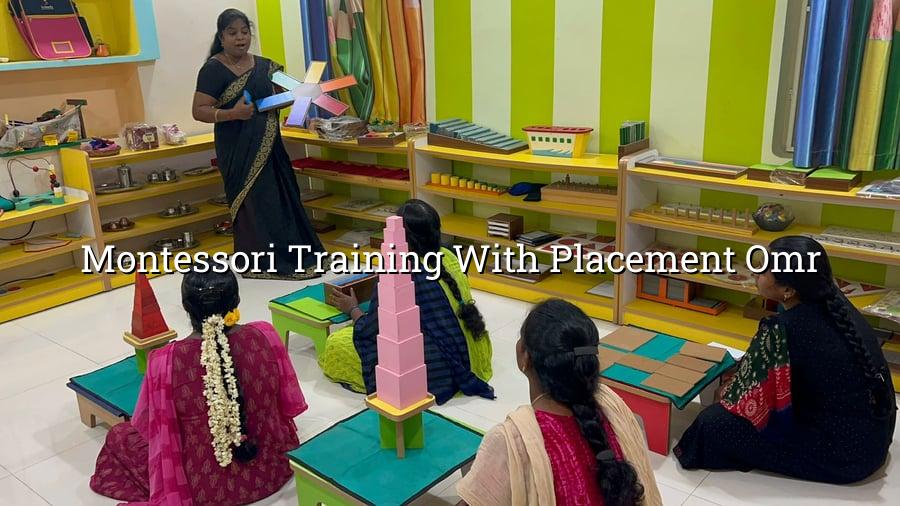
Montessori training with placement OMR is the practical path many Chennai learners choose when they want real classroom exposure, not just theory. At Super Star Montessori Teacher Training Institute, the focus stays on authentic Montessori methods, internship-linked learning, and clear career support for the OMR and nearby IT-corridor audience.
If you are comparing classroom-based and online options, this page explains how the training flow works, what placement support usually includes, and how to judge a programme by its practice hours, observation work, and mentoring. You will also see how the course connects with internship training, course options, and flexible batches for learners from OMR, Velachery, Medavakkam, and nearby Chennai neighbourhoods.
For most learners, placement support matters because they want confidence after training and a clear bridge into preschools, kindergartens, and Montessori houses. The best programmes combine authentic child-centred pedagogy with classroom practice, interview guidance, and introductions to partner schools where trainees can observe real routines. At Super Star Montessori, the Chennai campus approach is rooted in practical life, sensorial, language, mathematics, and cultural work, so trainees learn how to teach, not just how to talk about teaching.
OMR brings together young graduates, career switchers, and mothers returning to work, and many of them want a nearby route into early childhood education. A strong training programme should help them understand how a Montessori environment runs during the child’s full day, from arrival and grace-and-courtesy routines to material presentation and parent communication. That is why placement support is valuable: it gives learners exposure to classroom expectations, professional behaviour, and the kind of documentation employers often ask for during interviews.
A useful course does more than explain theory. It gives you repeated practice with materials, observation of age groups, and feedback on how you speak to children, organise the environment, and manage transitions. In a Chennai setting, especially for learners from OMR, a course becomes more relevant when it includes internship exposure, guided demonstrations, and discussion of common classroom situations such as handling a shy child, a mixed-age group, or a material presentation that needs adjustment. That is the difference between memorising Montessori terminology and becoming classroom-ready.
| Training Element | What You Learn | Why It Helps Placement |
|---|---|---|
| Classroom theory | Montessori philosophy, child development, and environment setup | Helps you explain your method clearly in interviews |
| Material practice | Practical life, sensorial, language, mathematics, and cultural activities | Shows schools that you can guide children through real work |
| Internship exposure | Observation and supervised classroom participation in partner settings | Builds confidence with age groups and daily school rhythm |
| Career mentoring | Interview guidance, communication practice, and profile preparation | Supports a smoother transition from training to job search |
A placement-focused Montessori course should feel structured from the first week. Trainees usually begin with philosophy and observation, then move into material presentations, lesson planning, and guided practice. As they gain confidence, the internship phase helps them see how real children respond to the environment, how teachers keep notes, and how each day’s work is shaped by the child’s pace rather than a rigid lecture timetable.
For OMR residents, the most helpful programmes reduce friction around commuting and scheduling without compromising quality. That means you can learn on weekends, attend online sessions where suitable, or combine live classes with practical workshops and classroom visits. The goal is not speed for its own sake; the goal is readiness, so when you apply to a preschool or Montessori house, you can show a clear understanding of both method and classroom behaviour.
Placement support becomes meaningful when the institute has a network of partner preschools or Montessori houses where trainees can observe, intern, and understand real expectations. Exposure to multiple settings is useful because every classroom has a slightly different rhythm, even when the teaching philosophy stays consistent.
Employers often respond well to candidates who can speak confidently about the Montessori environment, the role of observation, and how they guide children through independent activity. A good institute helps you prepare a short profile, organise certificates, and talk about your internship experiences in a calm, professional way.
Strong institutes do not stop support the moment classes end. They continue with career guidance, clarifying next steps for applications, and helping learners from OMR or other Chennai localities understand how to present themselves for school roles, assistant teacher roles, and entry-level early childhood positions.
Super Star Montessori Teacher Training Institute supports learners who want Montessori training with placement OMR by combining authentic Montessori learning, practical workshops, and internship-oriented guidance. You can explore our courses, compare flexible learning modes, or choose the online program if you need a structured option that fits your schedule. If your goal is classroom readiness and career support, our Chennai campus team can guide you through the next step.
Call +91 90924 63091 or +91 86680 47390, email info@superstarmontessori.com, or chat on WhatsApp.
The best option is usually the one that combines authentic Montessori content with internship exposure and career mentoring. For Chennai students, it also helps if the institute offers flexible batches and support that fits the OMR commuting pattern. Look for classroom practice, not only printed notes.
It should, because internship is where theory becomes practical confidence. A strong programme typically includes observation, supervised participation, and guidance on how to reflect on classroom experience. Always ask how partner schools or practice settings are arranged.
Duration depends on the programme you choose. Diploma-style Montessori training is often longer and deeper, while shorter NTT or KTT options are designed for quicker entry into early childhood teaching. The right choice depends on your goals, schedule, and the level of classroom responsibility you want.
Yes, online learning can work well when the course includes live classes, recorded modules, and practical guidance. Many learners near OMR prefer a blended model because it saves travel time while still allowing study discipline. Confirm whether material practice and feedback are part of the online structure.
Graduates commonly apply for assistant teacher, Montessori teacher, preschool educator, and kindergarten teaching roles. Some also move into classroom support, curriculum assistance, or continue to higher learning in early childhood education. Placement support helps with interview preparation and profile presentation.
Ask about practical hours, internship exposure, placement support, batch timings, and what kind of certification you will receive. It is also wise to ask how much of the course focuses on material demonstration and child observation. These details help you compare courses more accurately than a brochure headline.