Nursery teacher course Pammal seekers usually want one thing first: a practical path into teaching that builds real classroom confidence. This page shows how to choose the right NTT route, what you will learn, and how it connects to jobs in Chennai preschools.
If you are comparing nursery teacher training options near Pammal, the details matter more than the label on the brochure. You will find a clear guide to course structure, hands-on practice, internship exposure, and the kind of support that helps new teachers move from theory to a functioning classroom routine.
A strong nursery teacher course is not only about memorising classroom songs or worksheet activities. It should help you understand child development, plan age-appropriate lessons, manage a busy preschool class, and speak to parents with confidence. For learners from Pammal, this becomes especially useful when the aim is to work in nearby Chennai neighbourhoods where preschools expect teachers to be calm, organised, and practical from day one.
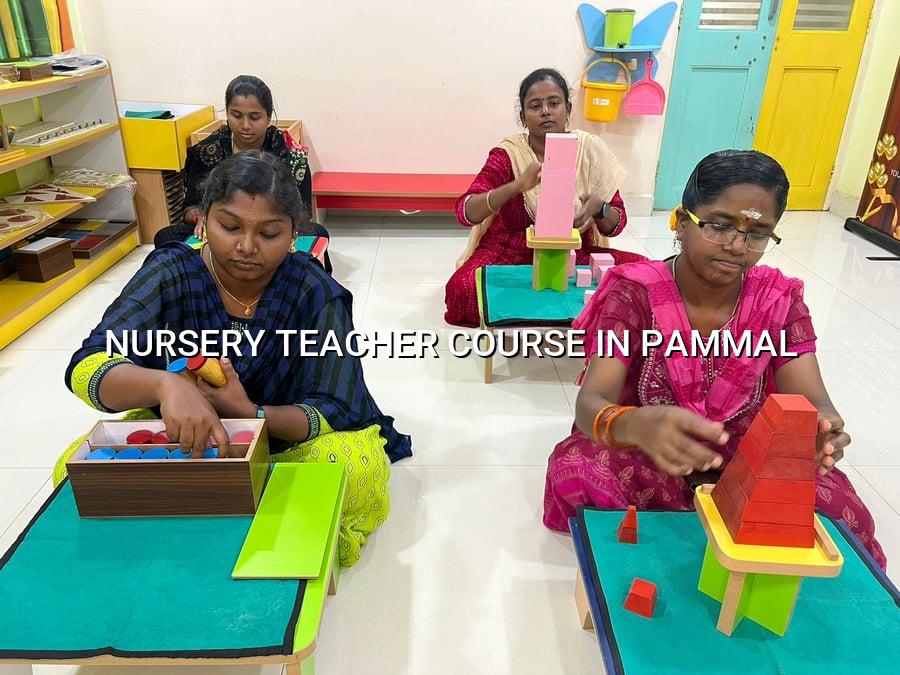
Children in nursery settings learn through movement, repetition, language, and routine, so a teacher must know how to guide those moments naturally. Practical sessions on material handling, storytelling, circle time, and classroom observation help you see how a lesson changes when it meets real children. In Chennai, that makes a visible difference during school interviews because you can explain not just what you studied, but how you would run a morning routine, support a shy child, or keep a group engaged.
A generic teaching course may stay broad, but nursery teacher training focuses on the early years, where emotional safety and clear structure matter as much as content. You learn how to introduce language, pre-mathematics, practical life, and basic sensory experiences in a way that suits preschool age groups. A good programme also helps you avoid a common mistake: teaching too much, too fast, without matching the child's attention span or development stage.
| Training Feature | What You Learn | Why It Helps in Preschool Jobs |
|---|---|---|
| Theory classes | Child development, nursery methods, classroom planning | Builds the foundation for confident teaching decisions |
| Practical sessions | Material handling, storytelling, rhymes, observation | Turns concepts into usable classroom skills |
| Internship exposure | Watching and assisting in partner preschool settings | Shows how routines, discipline, and interaction work with children |
| Career support | Demo teaching guidance, interview preparation, mentoring | Helps you present yourself clearly to schools in Chennai |
The best nursery teacher training programmes are structured to help beginners grow steadily. You start with the child’s needs, move into lesson planning and classroom practice, and then apply that learning through activities and observation. That sequence matters because nursery teachers are expected to handle real classroom situations, not just repeat definitions from a notebook.
In a practical course, you may work on areas like early literacy, pre-math ideas, fine motor development, classroom language, and social routines. You also learn how to present an activity clearly, how to correct gently, and how to notice whether a child needs more support, more repetition, or simply more time. Those are the details schools notice during interviews and demo classes.
Preschools often look for teachers who can keep children engaged without making the room feel rigid. That means using warm instructions, a steady voice, simple movement songs, and clean transitions between activities. If a teacher can manage a group in a way that feels organised and child-friendly, the classroom runs more smoothly and the learning day becomes easier for everyone.
Many learners focus only on the course name and ignore the teaching method behind it. A short syllabus with no practicum may look attractive at first, but it rarely gives the confidence needed in a live classroom. For Pammal students, it is wiser to compare the amount of practice, internship support, and teacher mentoring before deciding where to enrol.
Not every learner can attend a fixed schedule every day, especially when family responsibilities, travel time, or current work commitments are part of the picture. That is why flexible batches matter. A well-planned nursery teacher course should give you a route that fits your life while still preserving the practical nature of preschool training.
At Super Star Montessori, learners can explore weekday, weekend, fully online, and hybrid options depending on their needs. The online Montessori course is especially useful for those who want live sessions, recorded modules, and material-kit-based learning without losing the structure that makes the training effective. For many students near Pammal, that balance between flexibility and real teaching practice is what keeps the course manageable.
Some students worry that online or weekend learning will be lighter, but the real difference is only in delivery, not in the expectation of practice. A serious course still asks you to observe carefully, complete assignments properly, and build classroom understanding step by step. When the learning is guided well, even a flexible batch can produce job-ready teachers.
Super Star Montessori offers nursery teacher training that blends theory, practical teaching, and career mentoring for learners who want a serious start in early childhood education. You can also explore our courses for Montessori, NTT, KTT, and workshop-based learning, or choose the online program if you need flexible study support. For students from Pammal and nearby Chennai areas, the focus stays on classroom readiness, internship exposure, and confidence-building guidance.
Call +91 90924 63091 or +91 86680 47390, email info@superstarmontessori.com, or chat on WhatsApp.
The best option is usually the one that combines theory, practical activities, and internship exposure rather than only textbook study. Beginners should look for a programme that explains child development clearly and also gives enough classroom practice to build confidence.
You typically learn early childhood methods, lesson planning, classroom routine management, and activity-based teaching. Good training also covers storytelling, rhymes, pre-writing support, and ways to observe children patiently.
Yes, flexible learning modes can be useful when you have family or work responsibilities. Weekend or hybrid batches help many learners keep their training moving without disrupting their daily routine.
A strong course should include practical work because nursery teaching depends on real interaction, not only theory. Practice sessions help you understand how to set up activities, speak to children, and manage transitions smoothly.
It prepares you for demo classes, interviews, and daily classroom responsibilities in preschool settings. Employers often prefer candidates who can explain their lesson approach clearly and show that they understand child-centred teaching.
Yes, the focus is different even though both support early childhood education. Nursery teacher training is broader for preschool environments, while Montessori training gives deeper attention to the Montessori method, materials, and classroom philosophy.