Offline Montessori course in Anna Nagar gives you the chance to learn the method through real classroom practice, not just theory. If you want to train close to home in Chennai and build confidence with Montessori materials, child observation and lesson presentation, this page shows exactly what to expect.
This is a practical choice for aspiring teachers, preschool educators and career switchers who want structured, face-to-face learning. You will find how the course works, what skills are covered, how it compares with other training options, and how Super Star Montessori supports learners from Anna Nagar and nearby areas such as Kolathur, Mogappair, Ambattur and T Nagar.
Most people searching for an offline Montessori course Anna Nagar are looking for more than a certificate. They want a training environment where they can handle practical life materials, understand sensorial activities, and practice lesson delivery with feedback from trainers. A strong offline format also helps you build classroom confidence, because you see how each activity is presented, corrected and repeated until it becomes natural.
At Super Star Montessori, the emphasis stays on hands-on learning, child-centred thinking and clear teaching methods that can be used in real preschool settings. For learners in Anna Nagar, that means a course experience that feels grounded, local and career-focused, with enough structure to support beginners and enough depth to help working teachers upgrade their skills.
Montessori teaching is tactile and precise. A candidate may understand the theory of the method from reading, but real mastery comes when they physically arrange the Pink Tower, trace sandpaper letters, pour materials, prepare the environment and observe how a child responds. Offline training makes those routines easier to absorb because you learn by doing, correcting and repeating in a guided setting.
An offline batch is a good fit if you prefer direct interaction, need a disciplined schedule, or feel more confident learning alongside peers. It also suits parents, graduates and preschool staff in Anna Nagar who want a focused routine without depending entirely on self-paced study. If you later want flexibility, you can still combine this foundation with online Montessori study or choose additional practical workshops for material-making and classroom observation.
| Training Option | Best For | Main Learning Style |
|---|---|---|
| Offline Montessori Diploma | Beginners who want full hands-on classroom practice | Live trainer-led sessions, material work and guided correction |
| NTT / KTT classroom training | Those aiming for preschool teaching roles | Structured lessons, phonics, storytelling and child engagement |
| Online Montessori Course | Learners needing flexibility alongside work or home duties | Live classes, recorded modules and support resources |
| Practical Workshops | Teachers who want specific skill refreshers | Focused activity sessions on materials, observation and classroom routines |
A good offline programme does not stay limited to classroom talk. It should help you understand how a prepared environment works, how children move from interest to concentration, and how a teacher supports independence without taking over the activity. That is why the course usually moves through practical life exercises, sensorial exploration, language development, number work and cultural studies in a careful sequence.
For Anna Nagar learners, the benefit is clarity. You can see the size of the material, the order of the presentation, the purpose of each control of error and the way a child is guided toward self-correction. This makes it easier to step into a preschool or Montessori house in Chennai with a usable method, not just lecture notes.
Many new learners assume Montessori training is mainly about memorising activities. In reality, the method also depends on posture, observation, tone of voice, timing and classroom organisation. Small details matter: how a tray is carried, how an interruption is handled, and how a lesson is paused when a child is not ready. Offline guidance helps you notice these habits early, which can save you from building the wrong teaching style.
Chennai preschools often expect teachers who can work calmly, communicate clearly with children and adapt to mixed-age settings. A local offline course helps you practise those expectations in a familiar setting, while still keeping the Montessori philosophy intact. If you want to see how this learning environment feels, you can browse the campus and classroom gallery or read student experiences on the testimonials page.
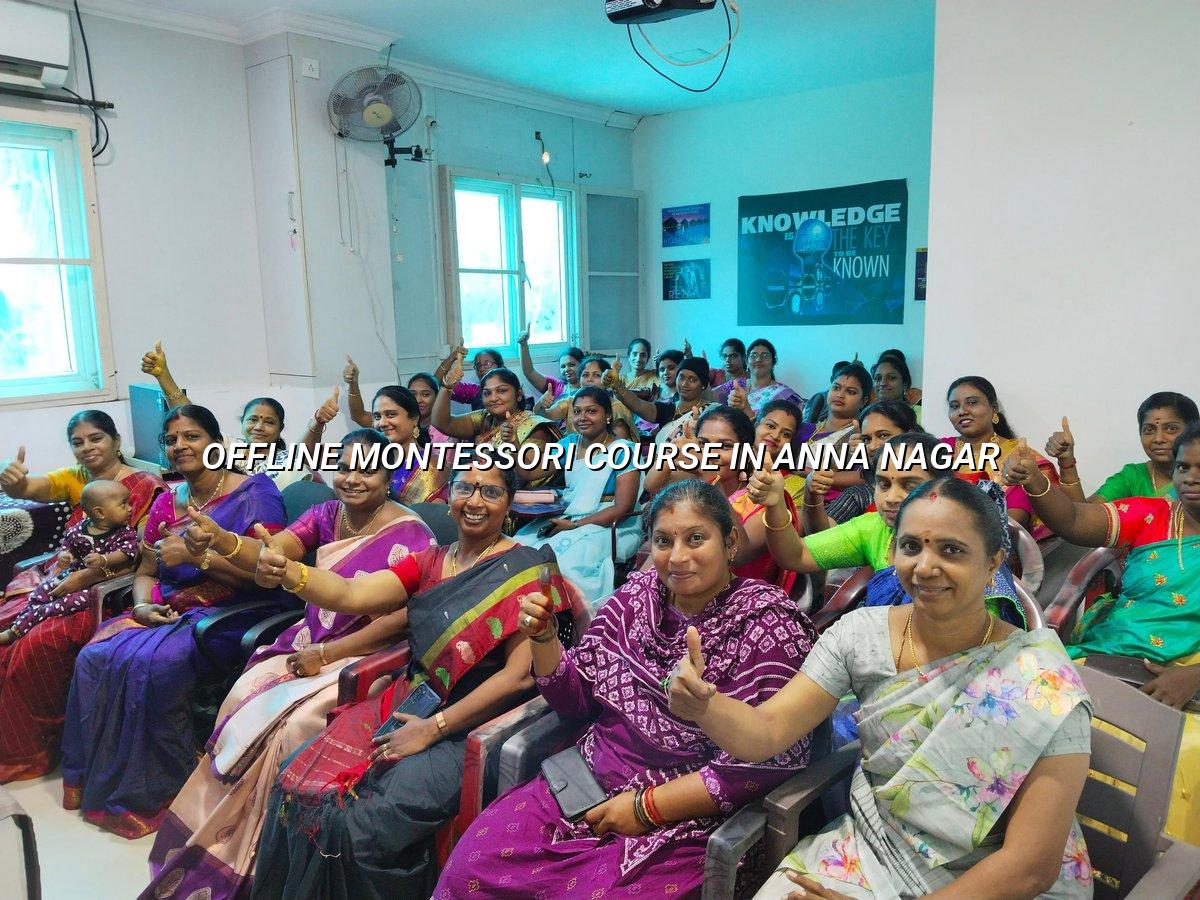
The offline journey usually begins with orientation, where you understand the method, the course rhythm and the expectations for practice. After that, trainers introduce material handling and observation so you can learn how children respond to each presentation. Once the basics are in place, the focus shifts toward lesson delivery, classroom management and the art of creating a calm learning space.
As training continues, many learners begin to see how the pieces connect. Practical life teaches order and coordination, sensorial work sharpens the senses, language grows vocabulary and expression, and mathematics becomes concrete through materials. The later stage is where confidence grows, because you are no longer asking only “what is the lesson?” but also “how do I present it well to a child?”
When training is close to home, attendance becomes easier and your learning rhythm stays steady. Learners from Anna Nagar often look for options that also serve Kolathur, Mogappair, Ambattur and neighbouring Chennai pockets, because commuting time can affect consistency. A nearby classroom setting reduces that friction and keeps your attention on practice instead of travel stress.
It also helps if you plan to work in Chennai schools after training. You can stay in the same city ecosystem, understand local preschool expectations and build a network through internship support and classroom exposure. For placement assistance and internship pathways, the internship training program and course overview pages are useful next steps.
Super Star Montessori offers offline Montessori, NTT and KTT training with a strong focus on practical classroom work, guided observation and career mentoring. If you want a route that combines authentic Montessori philosophy with modern teaching practice, our Chennai campus can support you with weekday, weekend, online and hybrid options as well as internship support through our courses. You can also explore the online program if you need extra flexibility later.
Call +91 90924 63091 or +91 86680 47390, email info@superstarmontessori.com, or chat on WhatsApp.
Yes, it is suitable for beginners because the classroom format lets you learn by watching, practising and correcting your presentation step by step. If you are new to Montessori ideas, an offline batch helps you understand the method more clearly than reading alone. Trainers can also pause, repeat and demonstrate again until the activity feels comfortable.
You typically learn practical life exercises, sensorial work, language, mathematics and cultural activities, along with observation and classroom management. A good course also includes material handling, lesson presentation and guidance on how to prepare a child-centred environment. These skills are useful for preschool and Montessori teaching roles in Chennai.
The flagship diploma usually runs for about 10–12 months, while some NTT and KTT options may have shorter or differently paced structures. The exact study plan depends on the batch type and how much classroom practice is included. If you want the current schedule, it is best to speak with the counselling team.
Yes, many learners choose a Chennai campus because it is easier to attend regularly from Anna Nagar, Mogappair and nearby neighbourhoods. A local batch can make commuting simpler and help you stay consistent with practice sessions. You can ask about weekday, weekend or flexible options based on your schedule.
Super Star Montessori provides career mentoring and placement assistance, along with internship exposure through partner preschools. Support may include guidance on interviews, classroom readiness and professional presentation. The aim is to help you move from training into a real teaching environment with confidence.
Offline training gives you direct hands-on practice, instant feedback and a stronger classroom routine, while online training gives you more flexibility through live classes and recorded modules. If you prefer face-to-face guidance, offline is often the better fit. If you need a mixed schedule, you can compare both formats before deciding.