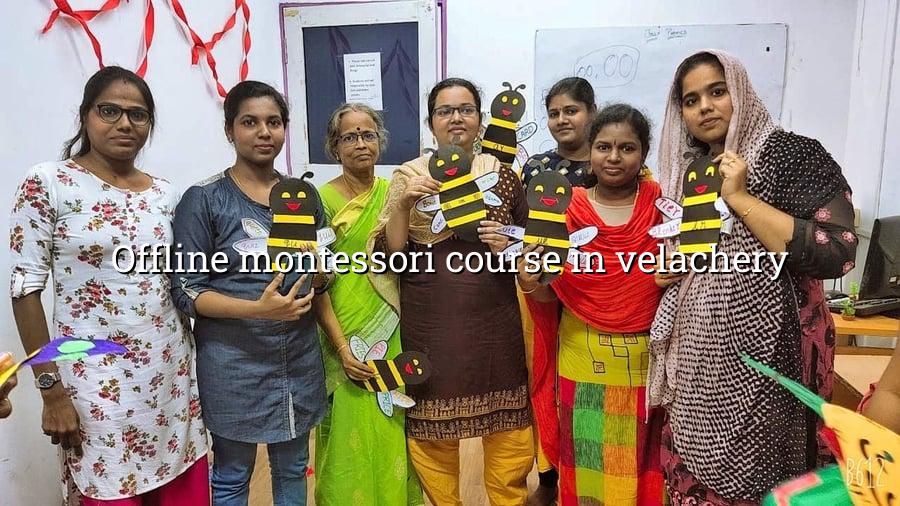
An offline Montessori course Velachery learners can attend should do more than explain theory; it should build real classroom skill, material confidence and the habit of observing children carefully. That is what prospective teachers look for when they want training they can experience in person at a Chennai campus.
This page helps you understand what to expect from an offline program, how it differs from a casual certificate class, and how to choose a course that prepares you for preschool, kindergarten and Montessori-house settings. If you are comparing Montessori teacher training options around Velachery, the sections below will help you match timing, format and practical learning to your career plans.
A strong offline program is built around guided practice, not just reading notes. For a learner from Velachery, that usually means attending classes in person, handling Montessori materials, watching demonstrations, and asking questions at the moment they arise. The best training also connects child development with classroom routines so you can move from theory to action with confidence.
At Super Star Montessori, the offline learning experience is designed for future teachers who want structured contact time, peer practice and mentor feedback. You can use that environment to build confidence in practical life, sensorial work, language, mathematics and cultural activities, all while learning how a real preschool classroom is organised.
Montessori teaching is easier to understand when you can touch, arrange and present the material yourself. In an offline classroom, students learn how to carry a tray, speak with calm precision, prepare a work cycle and correct small mistakes in sequence or presentation. Those habits matter in Chennai schools because children respond best when the environment is neat, purposeful and predictable.
This path is a good fit for fresh graduates, homemakers returning to work, preschool assistants, and career changers who want a practical route into early childhood education. It also suits Velachery residents who prefer face-to-face classes over fully online study, especially if they want regular mentor interaction and a campus routine that keeps learning steady.
| Training Focus | Best For | What You Learn |
|---|---|---|
| Diploma in Montessori Teacher Training | Beginners who want full preparation | Philosophy, materials, child development and classroom practice |
| Nursery Teacher Training | Those aiming for preschool jobs | Early years routines, communication, activity planning and child handling |
| Kindergarten Teacher Training | Teachers focused on LKG and UKG | Foundational literacy, numeracy, storytelling and classroom engagement |
| Practical Workshops | Learners who want extra hands-on work | Material making, observation, presentation practice and activity design |
Many first-time trainees know the theory but hesitate when they face a room full of children. Offline learning removes that gap by letting you practise repetition, tone, pacing and material presentation in a structured setting. You can correct posture, sequence and language use while a trainer is nearby, which is much harder to achieve through self-study alone.
It also helps you understand how Montessori spaces function day by day. A child may choose practical life work first, move to sensorial materials later and then shift into language or mathematics at a different pace; seeing that flow in a real classroom makes the method clearer. For learners from Velachery and nearby neighbourhoods such as Adyar, T Nagar, Pallavaram and Medavakkam, that proximity to a Chennai campus can make regular attendance more manageable.
One common mistake is choosing a course only because it is near home, without checking whether it has genuine practice. Another is assuming that a short classroom visit is enough to master Montessori presentation. A better approach is to look for a program that combines theory, observation and supervised repetition so you leave with usable teaching habits, not just notes.
Good trainers spend time on observation language, error control, child-centred interaction and the arrangement of the prepared environment. They may also discuss how to speak with parents, how to plan a lesson sequence and how to support different learning speeds in the same classroom. That kind of detail matters when you want to move into real school work after training.
An offline Montessori course can open a practical path into preschool teaching, assistant teacher roles and classroom support roles. If your goal is to work in Chennai schools, the training should help you learn the language of the classroom, understand child behaviour, and present activities with poise. Employers generally value graduates who can communicate clearly, manage children calmly and prepare engaging work environments.
Career support is especially useful when you are transitioning from another field or returning after a career break. With mentor guidance, portfolio-building and internship exposure, you can start applying for roles with a clearer sense of what schools expect. That support becomes even more relevant if you plan to grow into leadership, curriculum assistance or classroom coordination later.
Super Star Montessori offers practical Montessori teacher training through classroom-based learning, internship exposure and guided mentorship that suits learners who want an offline path near Velachery. You can also explore our courses for Montessori, NTT and KTT options, or compare them with the online program if your schedule changes later. For learners who want real teaching practice and structured support, the Chennai campus experience can be a strong starting point.
Call +91 90924 63091 or +91 86680 47390, email info@superstarmontessori.com, or chat on WhatsApp.
Yes, it is suitable for beginners who want direct classroom guidance and material practice. A well-structured offline course starts from Montessori philosophy and moves into practical demonstrations, so you do not need prior teaching experience. It is especially helpful if you learn better by watching, repeating and receiving immediate feedback.
Course duration can vary by program type and batch format. A flagship diploma is usually longer, while shorter training options like NTT or KTT may be structured differently. The best choice depends on whether you want broad preparation, a preschool-focused route, or extra practical exposure.
You can expect training in child development, Montessori philosophy, classroom management and material presentation. Most good programs also include practical life, sensorial, language, mathematics and cultural work. Offline classes give you the advantage of touching the materials, observing presentations and practising repeatedly under supervision.
Many serious institutes include internship exposure or placement assistance as part of career support. That helps you understand real classroom routines and gain confidence before you apply for jobs. It is smart to ask how internship guidance works, especially if you want to teach in Chennai or nearby neighbourhoods.
An offline course gives you in-person demonstrations, live correction and a campus learning rhythm. An online course is more flexible for people with limited travel time, but you may need more self-discipline to practise independently. Many learners choose offline first for hands-on confidence, then use online resources later for revision.
Look for practical sessions, experienced trainers, clear curriculum coverage and a real support system after training. It also helps if the institute has a Chennai campus, flexible batches and internship or placement mentoring. Ask for the course structure and speak to the team before enrolling so you can compare options carefully.