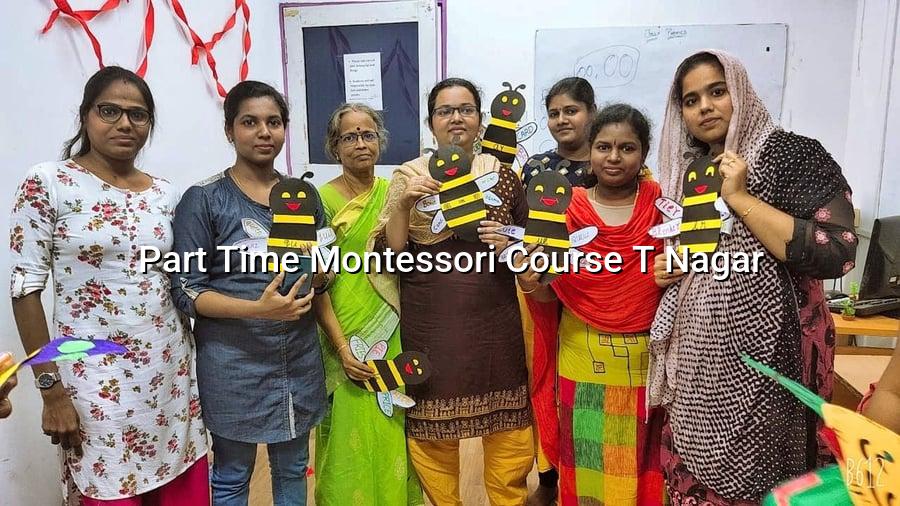
Part time Montessori course T. Nagar is a practical option if you want to study without pausing work, family care, or other daily commitments. At Super Star Montessori, the training is built around flexible learning and real classroom practice, so you can move forward with confidence while staying rooted in Chennai.
If you are comparing evening or weekend Montessori classes near T. Nagar, the key is not just convenience but the quality of hands-on training, guidance, and support you receive. This page explains how part-time Montessori learning works, what you study, how it fits into a busy schedule, and why many learners from T. Nagar, Nungambakkam, Kodambakkam, and nearby neighbourhoods choose this path.
A strong part-time program should help you understand Montessori philosophy and also show you how to use it in a real classroom. That means practical life exercises, sensorial work, language development, mathematics, and cultural activities, along with observation, child psychology basics, and lesson presentation practice. For learners in T. Nagar, the best fit is usually a course that balances live instruction with enough time to revise material and practise teaching steps at home.
Many learners in and around T. Nagar are already balancing office hours, school pickups, or household responsibilities. Weekend and evening batches reduce that pressure and make the training more realistic to complete. At our Chennai campus, learners also benefit from structured guidance, so they know exactly what to study between classes and how to prepare for demonstrations, assignments, and teaching practice.
Montessori training cannot stay theoretical for long. You need to touch the materials, repeat the activities, and understand how each lesson is introduced, corrected, and extended. When a course includes material work, classroom observation, and guided practice, you begin to think like a Montessori teacher rather than just a student reading notes. That is what makes a part time Montessori course T. Nagar genuinely useful for career change and upskilling.
| Learning Format | Best For | What You Gain |
|---|---|---|
| Weekend batch | Working professionals and busy parents | Regular classes with more free weekdays for personal commitments |
| Evening batch | Those who prefer after-work study | Consistent learning without affecting daytime routines |
| Hybrid support | Learners who need flexibility | Blend of in-person guidance and study support between classes |
| Practical training | Career changers and first-time teachers | Material handling, lesson planning, and presentation confidence |
People arrive at this decision for different reasons. Some want to return to work after a break, some want a career that matches school hours better, and some already work in early years settings but want formal Montessori training. In T. Nagar, where daily schedules can be full and travel planning matters, a part-time format makes the step into teacher training feel more practical.
It also suits learners who want to test their interest before moving into a longer professional path. If you are unsure whether you want to teach toddlers, preschoolers, or kindergarten children, part-time study gives you enough exposure to understand the classroom world before making your next move. For many, that clarity is as valuable as the certificate itself.
The curriculum should go beyond lecture notes and focus on how children learn through movement, repetition, and independence. You may work through Montessori philosophy, child development, classroom management, lesson sequencing, and activity preparation. The goal is to help you understand not only what to teach, but how to guide a child without interrupting the child’s natural concentration.
A well-designed course links theory with real classroom habits. For example, practical life exercises teach order, coordination, and independence, while sensorial work builds discrimination and focus. Language, mathematics, and cultural lessons then extend those foundations in a way that feels structured and child-friendly. When these areas are taught with demonstrations and practice, you learn how to present material clearly and calmly.
Many learners assume that Montessori training is only about watching videos or memorising lesson names. That approach leaves gaps, especially when you later stand in front of children and need to manage pace, voice, and movement. A better choice is a course that gives you repeated practice, feedback, and observation time, so your classroom presence grows steadily instead of all at once.
Studying close to home matters when your week is already packed. Learners from T. Nagar, Anna Nagar, Velachery, Porur, and Adyar often look for a centre that is reachable and organised, with a clear training plan and approachable faculty. Chennai-based training also helps you stay connected to local preschool practices, classroom expectations, and internship possibilities.
At Super Star Montessori, the emphasis is on practical readiness and long-term support, not only finishing a syllabus. That makes the experience more valuable when you later apply for roles in preschools, kindergartens, or Montessori houses across Chennai and beyond. The training is meant to help you grow into the role with confidence and care.
Super Star Montessori offers Montessori teacher training, Nursery Teacher Training, Kindergarten Teacher Training, online learning, internships, and practical workshops, so you can choose a path that matches your routine and goals. If you are looking for a part time Montessori course T. Nagar learners can manage alongside daily life, our flexible batches and hands-on approach are designed for that need. You can also explore our courses or the online program if you want a more flexible study option before visiting the Chennai campus.
Call +91 90924 63091 or +91 86680 47390, email info@superstarmontessori.com, or chat on WhatsApp.
Yes, part-time Montessori training is often chosen by working women and homemakers who need a practical schedule. Weekend or evening classes can make it easier to study consistently while handling family or office responsibilities. The important thing is to pick a course that still includes hands-on practice and clear academic support.
The main difference is the class schedule and pace. Part-time learning spreads sessions across evenings or weekends, while regular training may require more frequent attendance. A good part-time course should still cover the same core Montessori ideas, practical work, and teaching practice in a structured way.
Yes, many learners begin training while keeping their current job. The key is choosing a batch format that fits your work hours and leaves time for revision and practice. Flexible planning and steady attendance are usually enough to keep the course manageable.
You typically study Montessori philosophy, child development, classroom management, lesson presentation, and practical activities. Good training also includes areas like practical life, sensorial, language, mathematics, and cultural work. Some programs add observation and internship support so you can see how the methods work in real classrooms.
Practical training should be part of any serious Montessori course. Learners need material work, demonstrations, and classroom observation to build confidence. Without hands-on practice, it is hard to understand the pace and precision that Montessori teaching requires.
Look for a course that explains the curriculum clearly, offers practical exposure, and provides support after admission. If you are a beginner, ask how the batch is structured, what kind of practice you will get, and whether the training is suitable for your current routine. A supportive Chennai campus can make the learning journey smoother.