Pre and Primary Montessori Teacher Training OMR

Home / Courses / OMR Guide

Pre and primary Montessori teacher training OMR is the right starting point if you want to teach young children with confidence, calm structure, and real classroom skill. This page shows what the course should include, how training is usually structured, and what to look for before you enroll in Chennai.

If you live near the OMR corridor, you may be comparing classroom-based, weekend, online, and hybrid options while trying to understand which path suits your schedule. Here, you will see how Montessori pedagogy, practical classroom work, and nursery teacher training expectations come together for learners in Chennai and nearby areas.

Pre and Primary Montessori Teacher Training OMR
OMR Course Focus

What Pre and Primary Montessori Teacher Training OMR Should Cover

Strong pre-primary training is not only about child care basics. It should help you understand how children between roughly two-and-a-half and six years learn through movement, repetition, language exposure, and guided independence. In a proper Montessori classroom, the teacher prepares the environment, observes carefully, and introduces materials in a sequence that supports the child rather than rushing the lesson. That is why a focused pre and primary Montessori teacher training OMR page needs to discuss both philosophy and practical classroom handling.

Why OMR Learners Need a Practical, Not Just Theoretical, Program

Many candidates in OMR, Sholinganallur-side neighborhoods, and the wider Chennai IT corridor need flexible study options because they are balancing work, family responsibilities, or a return to teaching after a break. A useful Montessori course should include hands-on material work, classroom observation, storytelling, lesson presentation, and guidance on daily routines in a preschool. Super Star Montessori builds this balance into its weekday, weekend, fully online, and hybrid batches so learners can choose a format that fits real life.

Core Skills That Make a Teacher Classroom-Ready

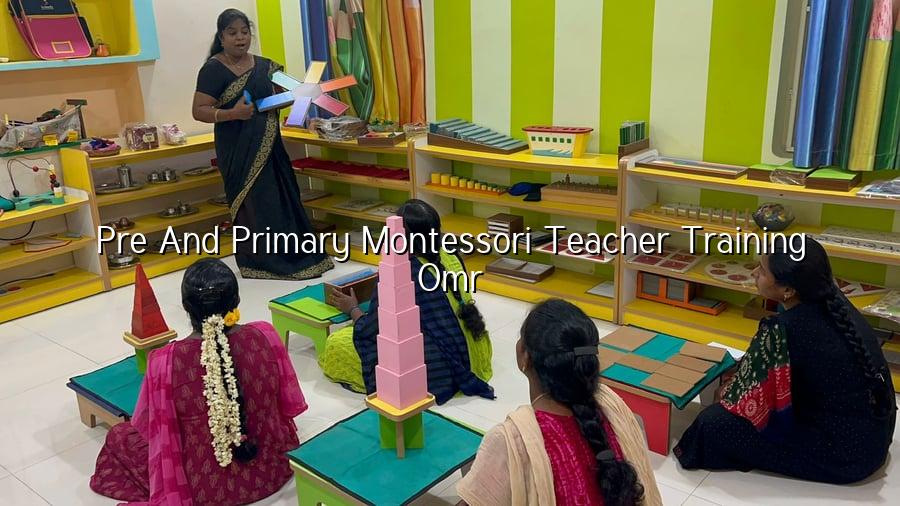
Pre-primary teaching becomes easier when the training covers practical life exercises, sensorial activities, early language work, mathematics readiness, and cultural exposure. These are not isolated subjects; they help a child develop concentration, independence, order, and confidence. If you are evaluating pre and primary Montessori teacher training OMR options, look for a course that lets you practice with materials, not just read about them.

  • Learn practical life demonstrations such as pouring, spooning, folding, and table care.
  • Practice sensorial lessons that build visual, tactile, auditory, and movement-based discrimination.
  • Understand how to introduce language through phonetic sounds, vocabulary, and pre-writing readiness.
  • Get exposure to classroom observation, record keeping, and child-friendly behaviour guidance.
Step by Step

How to Start Montessori Training from OMR

  1. Check your goal. Decide whether you want a pre-primary teaching role, a nursery role, or a broader Montessori classroom path, because the training format and support needs may differ.
  2. Review the course structure. Ask whether the program includes lesson planning, child psychology basics, material handling, observation, and practical teaching practice.
  3. Choose your batch mode. If you are in the OMR zone, compare weekday, weekend, online, and hybrid options so learning can fit your schedule without losing quality.
  4. Look at internship support. A good institute should help you gain exposure through internship training or classroom visits, especially if you want experience before applying to preschools.
  5. Plan your next step. After training, speak with the institute about placement assistance, career mentoring, and the kind of preschool or Montessori house roles that match your profile.
At a Glance

Course Options Compared for OMR Learners

Training Path Best For Typical Learning Focus
Diploma in Montessori Teacher TrainingLearners seeking a full Montessori foundationMontessori philosophy, practical work, lesson presentation, classroom readiness
Nursery Teacher TrainingBeginners aiming for preschool teaching rolesEarly childhood care, age-appropriate activities, communication, routines
Kindergarten Teacher TrainingThose interested in LKG and UKG teaching supportFoundational literacy, numeracy, activity planning, classroom management
Online Montessori CourseOMR learners who need flexible study supportLive classes, recorded modules, guided practice, material kit support
Classroom Readiness

What Real Pre-Primary Teaching Practice Looks Like

Good training does more than explain the Montessori method. It shows you how to greet children, guide transition time, introduce materials one at a time, and maintain a peaceful classroom flow. Learners often discover that the smallest routines matter most: how a child carries a tray, returns work to the shelf, or responds to a gentle correction. These habits are the foundation of order in a pre-primary environment.

In Chennai preschools, including those around OMR, employers usually look for teachers who can manage routines, communicate clearly with parents, and support both independent work and group activities. That is why a course with observation and practice is more useful than one that stays entirely theoretical. It prepares you to step into a classroom with a realistic sense of timing, behavior guidance, and age-appropriate expectations.

Common Mistakes New Teachers Should Avoid

One common mistake is trying to entertain children instead of guiding them. Montessori teaching is structured, calm, and purposeful; it is not about filling every minute with noise or worksheets. Another mistake is skipping observation, because children often show you what they need through their attention span, movement, and repeated choices. A strong teacher learns to notice those signals and respond with the right material at the right time.

Why the Chennai Context Matters

Chennai families often expect preschools to balance academic readiness with care, discipline, and child-friendly routines. In local settings such as OMR, Velachery, Adyar, and Pallavaram, teachers may work in mixed-parent expectation environments, so communication and professionalism matter as much as activity design. Training that reflects these realities helps you speak the language of schools and parents more effectively.
Who It Helps

Who Should Consider This Training Path

This path suits fresh graduates, homemakers returning to work, preschool assistants who want formal training, and aspiring teachers who prefer early childhood education over primary-school subject teaching. It also suits learners who want a practical, skill-based route into the profession rather than a long academic program that feels disconnected from classroom reality. If you are searching for pre and primary Montessori teacher training OMR because you want a nearby, flexible, and job-focused option, the right institute should make the transition feel clear and manageable.

Some learners later move into roles that involve school coordination, classroom support, or further study in early childhood care. Others continue with workshops, internship experience, or advanced programs such as special educator study or school owner training. A well-planned first step opens the door to several teaching-related paths without forcing you to decide everything on day one.

How Super Star Montessori Can Help

Super Star Montessori offers Montessori, Nursery Teacher Training, Kindergarten Teacher Training, online learning, and internship support so OMR learners can choose a path that fits their schedule and goals. Our Chennai campus combines authentic Montessori philosophy with practical classroom practice, which is especially helpful if you want confidence in lesson presentation, material handling, and daily preschool routines. If you are comparing options for pre and primary Montessori teacher training OMR, speak with our team and find the batch format that suits you best.

Call +91 90924 63091 or +91 86680 47390, email info@superstarmontessori.com, or chat on WhatsApp.

Frequently Asked

Common Questions About OMR Montessori Training

What is the best pre and primary Montessori teacher training OMR course for beginners?

The best beginner course should include Montessori philosophy, practical life, sensorial work, language foundations, and classroom practice. If you are starting from zero, look for guided demonstrations and observation support so the learning feels structured rather than overwhelming. A flexible batch format also helps OMR learners who need study options around work or family.

How long does Montessori teacher training usually take in Chennai?

Training duration can vary by course type and study mode. A flagship diploma usually takes longer, while NTT and KTT programs are often shorter and more focused. The best choice depends on whether you want a broad Montessori foundation or a quicker path into preschool teaching support.

Can I do Montessori teacher training online if I live on OMR?

Yes, online learning can work well if it includes live classes, recorded modules, guided assignments, and support for practical understanding. For a subject like Montessori education, you should still look for material-based demonstrations and clear teaching practice guidance. That helps you connect theory with the real classroom.

Do pre-primary teacher training courses include internship support?

Many quality programs offer internship exposure through partner preschools or observation opportunities. Internship support matters because it helps you see how routines, communication, and classroom flow work in real settings. It also makes your learning more practical when you start applying for teaching roles.

What subjects are covered in Montessori teacher training?

Typical coverage includes practical life, sensorial, language, mathematics, cultural areas, classroom management, child development basics, and lesson presentation. Good training also explains how to set up the environment and observe children carefully. These elements matter because Montessori teaching depends on preparation and timing, not just subject knowledge.

How do I choose between Montessori, NTT, and KTT training?

Choose Montessori training if you want the authentic method and a wider classroom foundation. Choose NTT if your goal is general nursery teaching, and KTT if you want a stronger focus on kindergarten-age children. If you are unsure, a counseling call can help you match the program to your current background and career goal.

Get Started

Start Your Montessori Teaching Path with Confidence

Choose the training format that fits your schedule and build real classroom skill with guidance from Super Star Montessori.

Get Started Today

Begin Your Journey as a Certified Montessori Educator

Join 5000+ trained educators. Online & offline batches, recognized certification, internship and lifetime placement support.

Enquire Now