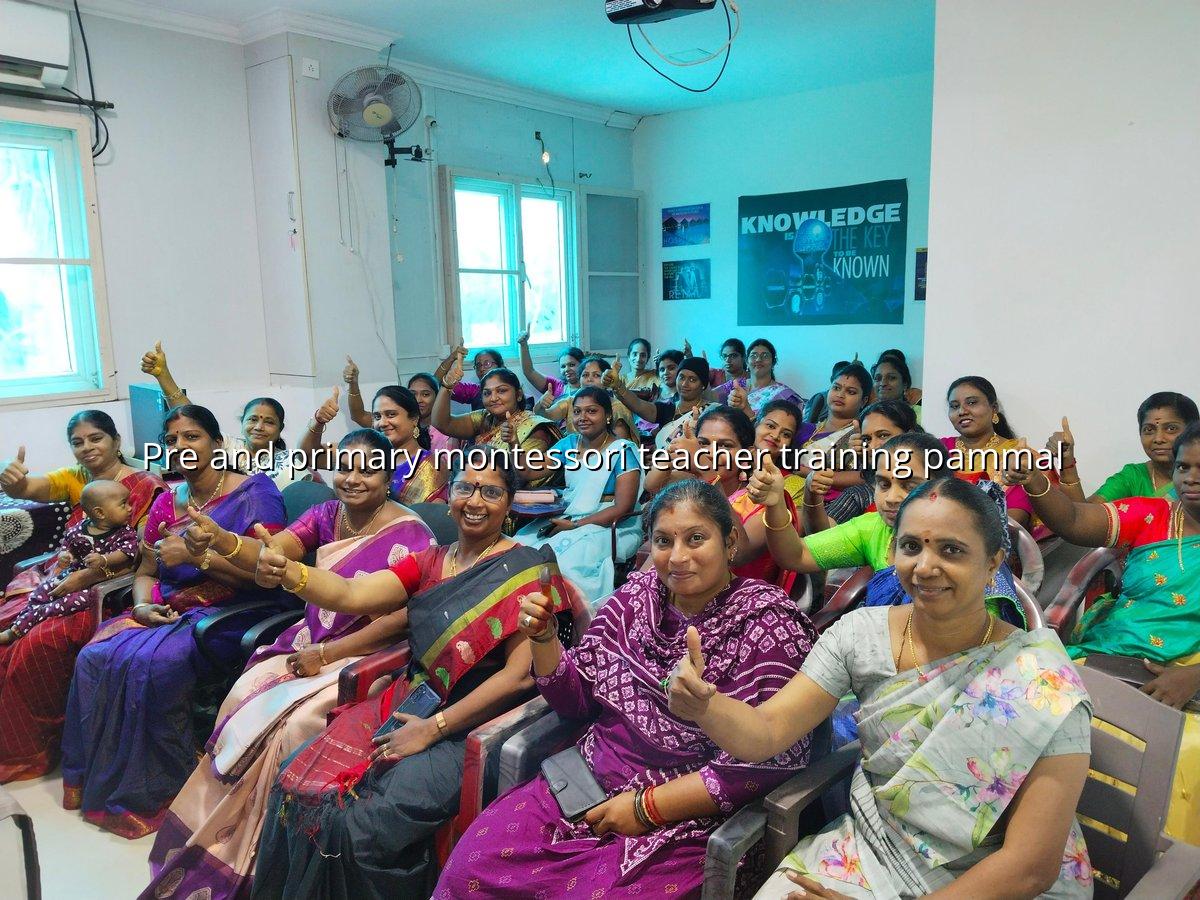
Pre and primary montessori teacher training Pammal is a practical route for anyone who wants to teach young children with confidence, patience and clear classroom methods. At Super Star Montessori, the focus is on how children learn through movement, language, sensorial work and independence, so you can build real teaching skill instead of memorising theory alone.
If you are from Pammal or nearby Chennai neighbourhoods such as Pallavaram, Chromepet, Tambaram or Guduvanchery, this page helps you understand the course path, learning style and career options that suit pre-primary teaching. You will also see how a Montessori course differs from general teacher training, what the training journey looks like, and how weekend, weekday and online batches can fit different routines.
This training is built for people who want to work with nursery, kindergarten and early primary children in a structured yet child-friendly way. The aim is not only to help you teach letters and numbers, but to show you how to guide practical life routines, language development, sensorial refinement, classroom discipline and social confidence in a calm environment. In a strong Montessori setting, the teacher observes first, supports gently and introduces materials at the right moment.
For many learners searching in Pammal, the real question is whether the course will prepare them for an actual classroom. That is where hands-on practice matters. A quality Montessori program should include material work, storytelling, phonics, lesson presentation, classroom observation and enough guided practice to help you step into a pre-primary room with clarity.
Young children do not learn well from lectures, so teacher training for this age group must model the same active learning style expected in the classroom. In Chennai, especially for preschools around Pammal and Pallavaram, schools often expect teachers to manage routines such as circle time, language drills, songs, seatwork and activity corners with ease. When you practise these steps during training, you learn how to keep children engaged without rushing them.
A trained pre-primary teacher should be able to prepare materials, introduce lessons clearly, notice a child's pace and handle common classroom situations with patience. She or he should also understand how to support early reading readiness, number sense and fine motor development through age-appropriate Montessori activities. This is why serious learners often choose a course that combines observation, demonstrations and supervised practice instead of a purely classroom-based lecture format.
| Pathway | Best For | What You Focus On |
|---|---|---|
| Montessori teacher training | Learners who want authentic Montessori classroom practice | Practical life, sensorial, language, mathematics and cultural lessons |
| Nursery teacher training | Those aiming for nursery classroom support and preschool teaching | Rhymes, storytelling, early literacy, classroom routines and child engagement |
| Kindergarten teacher training | Teachers working with LKG and UKG age groups | Pre-reading, pre-writing, numeracy, communication and activity planning |
| Online Montessori course | Students who need flexible study from Pammal and nearby areas | Live classes, recorded modules and guided learning with material support |
A common mistake is to think every preschool course teaches the same thing. In reality, Montessori training focuses on how to present carefully designed materials so a child can work independently and repeat activities until mastery develops. That changes how you plan a lesson, how you correct mistakes and how you prepare the room.
In a general teacher training course, you may learn classroom management and child development ideas. In Montessori, you also learn the order of introduction, the purpose of each material and the role of observation in guiding the child. This is especially valuable for teachers who want to work in premium preschools or Montessori houses across Chennai, where parents look for a classroom that feels organised, calm and purposeful.
Effective training should help you practise everything from setting up shelves to giving clear instructions for individual work. You may learn how to support children in tracing shapes, recognising sounds, sorting objects, counting beads and building vocabulary through conversation and storytelling. These are small actions on paper, but they shape the daily rhythm of a real pre-primary room.
Many learners in Pammal are looking for courses close to the southern and western parts of Chennai, where preschool openings are spread across residential areas and IT corridor neighbourhoods. Understanding the local school environment helps you prepare for classrooms in places like Velachery, Porur, OMR, Adyar and Ambattur, while still keeping your base of learning in Chennai. That balance matters when you want both convenience and strong job readiness.
Super Star Montessori structures its courses so learners can grow from observation to practice in a steady way. The teaching approach respects the child, but it also respects the teacher's need for clear guidance. That is why a balanced curriculum is important: it helps you understand the philosophy while still preparing you to handle the practical side of the classroom.
For pre and primary teaching, the strongest programs usually include phonics support, story reading, presentation drills, classroom visits or observation, and opportunities to discuss real teaching scenarios. If you are comparing options from Pammal, also ask whether the institute offers guidance for internships and placement support, because that support can help you move from training into a school environment more confidently.
Super Star Montessori offers Montessori, Nursery (NTT), Kindergarten (KTT), online and internship-focused learning paths that suit different schedules and career goals. If you are exploring pre and primary montessori teacher training Pammal, our Chennai campus can guide you toward the right batch, the right practice exposure and the right next step for your early childhood teaching journey. You can also compare options on our courses or explore the online program if you need flexibility.
Call +91 90924 63091 or +91 86680 47390, email info@superstarmontessori.com, or chat on WhatsApp.
Yes, it is suitable for beginners who want a structured path into preschool teaching. A good program starts from Montessori fundamentals, classroom routines and material handling, then builds into lesson presentation and practice. If you are new to teaching, this kind of training helps you move step by step instead of expecting prior classroom experience.
Montessori training focuses strongly on guided independence, special learning materials and the order of introducing concepts. NTT usually covers broader nursery teaching needs such as rhymes, stories, classroom activity planning and early childhood development. Many learners choose based on the age group they want to teach and the type of preschool environment they prefer.
Yes, many learners from Pammal look for training that is accessible from Chennai's nearby neighbourhoods. Depending on your routine, you can choose weekday, weekend, fully online or hybrid learning options where available. That flexibility helps students, homemakers and working professionals continue their studies more comfortably.
Quality pre-primary training should include practical exposure, not only written notes. Look for lesson demonstrations, material practice, observation and internship support so you understand how real preschool classes run. This is especially useful if you want to work confidently in Chennai preschools after completing the course.
Graduates commonly apply for preschool teacher, Montessori teacher, assistant teacher and kindergarten support roles. Some also use the training as a base for further study in early childhood education, special educator pathways or school owner guidance. Your final role will depend on your experience, confidence and the needs of the school you join.
Choose the batch that matches your daily routine and learning pace. If you need frequent contact with trainers, a weekday or hybrid format may work well; if you are managing family or work, weekends or online classes may be more practical. You can contact the institute to discuss the best fit before enrolling.