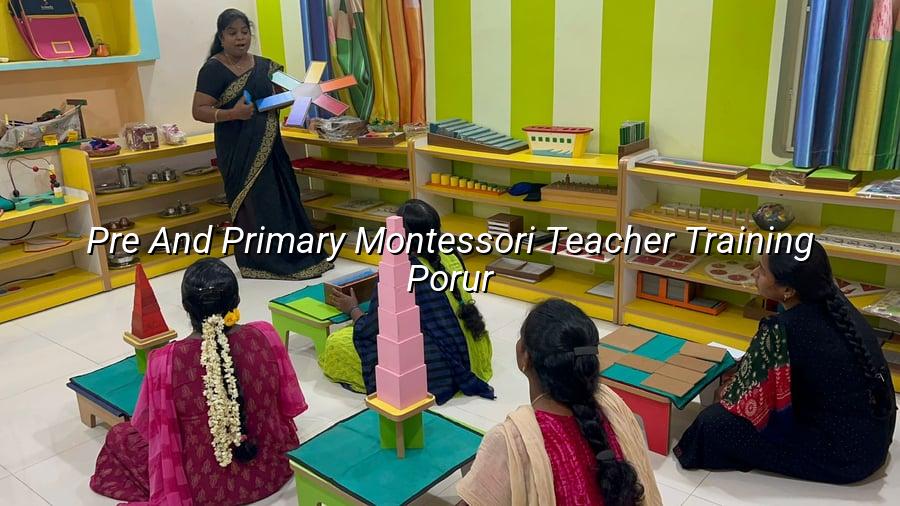
Pre and primary Montessori teacher training Porur gives aspiring educators a clear path into classrooms where children learn through movement, language, and hands-on discovery. If you are planning a career near Porur or nearby Chennai neighbourhoods, this page shows what the training covers, how to choose the right batch, and how the Montessori approach prepares you for real classroom work.
This guide is written for school graduates, working professionals, mothers returning to work, and anyone comparing Montessori, NTT, and kindergarten options in Chennai. You will see the skills employers expect, the learning flow inside a strong teacher training program, and the practical steps that help you move from interest to confident classroom practice.
Parents and preschools in Chennai look for teachers who can guide children patiently, present materials clearly, and support independence without turning the classroom into a lecture hall. That is why pre and primary Montessori teacher training Porur is more than a certificate search; it is a practical preparation for handling children in the pre-primary stage with calm structure and age-appropriate method. A strong course trains you to observe behaviour, organise materials, and create routines that help children settle, focus, and learn with confidence.
In a well-built program, the classroom method is not taught as theory alone. You work through practical life, sensorial, language, mathematics, and cultural activities, then learn how to present them in sequence so the child experiences success step by step. For aspiring teachers around Porur, this matters because local schools often expect job-ready skills, not just familiarity with child development terms.
Children in pre-primary classes respond best to short, purposeful lessons, neat material arrangement, and a teacher who understands both freedom and limits. During training, you learn how to manage a mixed group, support different attention spans, and handle beginner learners who may not yet speak fluently, sit for long periods, or follow long instructions. This is where Montessori practice helps you translate an idea into a usable classroom routine, whether you are teaching in Porur, Kattupakkam-side schools, or other west Chennai neighbourhoods.
Effective pre-primary teachers do simple things consistently: they greet children at eye level, demonstrate materials slowly, and repeat lessons when needed without making the child feel rushed. They also keep records of observations so they know which child needs more language practice, which child is ready for a harder sensorial task, and which child benefits from more movement work. That steady, practical approach is what employers notice when they look for teachers who can contribute from the first term.
| Program Type | Best For | Typical Learning Focus |
|---|---|---|
| Montessori teacher training | Students who want the strongest foundation in Montessori method | Practical life, sensorial, language, math, and classroom presentation skills |
| NTT | Those aiming for broader nursery and pre-primary roles | Child development, classroom routines, stories, songs, and early learning support |
| KTT | Teachers focused on kindergarten classrooms | Early literacy, numeracy readiness, creative activities, and child engagement |
| Online or hybrid study | Working learners and parents in Porur and nearby areas | Live classes, recorded modules, material support, and flexible learning access |
Many applicants focus only on the certificate name, but schools usually notice habits first. A job-ready teacher knows how to set up the environment before children arrive, how to present a material without overtalking, and how to step back once the child begins independent work. Training should also help you speak clearly with parents, document progress, and stay consistent when the class becomes noisy or uneven in pace.
For learners in Porur, the right institute should also feel practical from the first day. That means clear demonstrations, manageable assignments, material-making practice, and a training rhythm that works for different schedules. If you are comparing courses, ask whether the classroom work is repeated enough for real confidence, because Montessori teaching is built on precision, not guesswork.
One mistake is selecting a course only because it is short, without checking whether the content gives enough classroom practice. Another is assuming every early childhood course is the same, when the Montessori approach has its own material sequence, presentation style, and observation-based method. It also helps to avoid programs that talk only about theory and leave you uncertain about how to manage children, explain lessons, or prepare classroom materials.
When your study location fits your routine, you are more likely to attend regularly, complete practice tasks, and revisit lessons that need reinforcement. Porur connects well with several west and central Chennai neighbourhoods, so many learners prefer a plan that reduces travel stress while still giving serious classroom exposure. If you live or work nearby, the best option is one that balances convenience with real teaching practice, not one that saves travel time but weakens the learning experience.
Super Star Montessori offers Montessori teacher training, NTT, KTT, online learning, workshops, and internship support designed for practical classroom readiness. If you are exploring pre and primary Montessori teacher training Porur, our Chennai campus can help you compare the right mode, understand the curriculum, and choose a path that fits your schedule and career plan. You can also look at our courses or explore the online program if you need a flexible option.
Call +91 90924 63091 or +91 86680 47390, email info@superstarmontessori.com, or chat on WhatsApp.
The training usually covers Montessori philosophy, practical life activities, sensorial work, language, mathematics, and classroom presentation methods. A strong course also includes observation, material handling, and practice in managing young children in a pre-primary setting.
Yes, it is commonly chosen by beginners who want a clear entry into early childhood teaching. The training starts with foundational concepts and then moves into practical classroom work, so you can build confidence step by step.
Different programs may run in different formats, but diploma-based Montessori training is often designed as a structured multi-month course. The right choice depends on how much practical exposure, internship support, and guided practice you want before applying for teaching roles.
Yes, many learners prefer weekend or hybrid learning because it is easier to manage travel and daily responsibilities. Flexible batches are helpful if you want to study seriously while balancing work, family time, or other commitments in Chennai.
Graduates typically apply for pre-primary, nursery, kindergarten, and Montessori assistant teacher roles. Some also continue into workshops, internship-based practice, or further early childhood learning to strengthen their classroom profile.
Yes, internship support is part of the practical learning approach, and it helps you observe classrooms and apply what you learn. This kind of experience is valuable because it connects theory with the everyday pace of a real child-friendly environment.