Preschool teacher training Mogappair is the right starting point if you want to step into early childhood education with practical confidence, not just theory. The right program helps you understand how young children learn, how to guide them through daily routines, and how to create a calm, engaging classroom.
If you are a fresh graduate, a parent returning to work, or a teacher looking to shift into preschool teaching, this page shows what to look for in a strong training path. You will also see how Montessori methods, NTT preparation and hands-on practice support real classroom readiness for learners in and around Chennai.
Good preschool teacher training Mogappair should prepare you for the realities of a busy classroom, not only for passing a written test. A child in a preschool setting needs gentle communication, age-appropriate activities, clear routines, and a teacher who knows how to observe rather than interrupt every moment. At Super Star Montessori, that balance of theory and practice is built into the learning experience so trainees can move from understanding concepts to using them confidently.
In a Chennai preschool classroom, the day often begins with settling children, managing separation anxiety, and setting the tone for the rest of the morning. Training should cover practical life work, sensorial activities, early language, number readiness, storytelling, and classroom etiquette, because these are the building blocks that make children feel secure and engaged. When these skills are practiced repeatedly, trainees learn how to guide children with patience instead of forcing quick results.
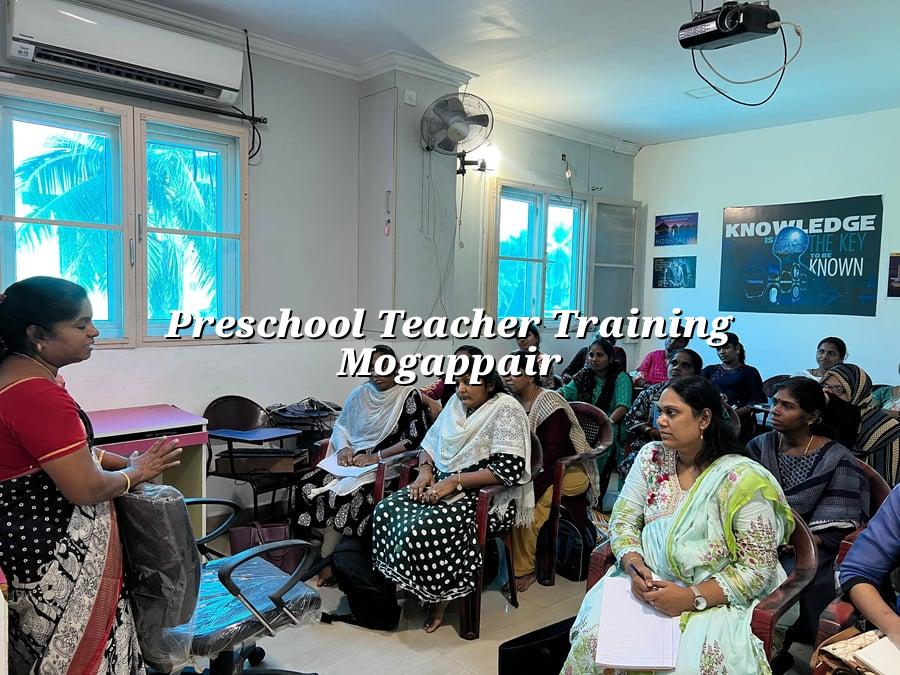
Many learners understand child development on paper but feel unsure when they face a live classroom for the first time. That is why observation, demo sessions, and guided practice matter so much in preschool teacher training Mogappair. Watching how a trained teacher introduces a material, redirects a restless child, or helps a group transition from play to work can teach more than a lecture alone. It also helps trainees understand the rhythm of classrooms in neighbourhoods such as Mogappair, Anna Nagar, and Kolathur, where parents look for structured and caring early learning environments.
| Program Type | Main Focus | Best For |
|---|---|---|
| Diploma in Montessori Teacher Training | Authentic Montessori method, classroom practice and material work | Students who want a strong preschool and Montessori foundation |
| Nursery Teacher Training (NTT) | Early childhood concepts, play-based learning and classroom management | Those aiming for preschool and nursery teaching roles |
| Kindergarten Teacher Training (KTT) | Pre-primary learning, readiness skills and activity planning | Learners who want to teach LKG and UKG age groups |
| Online Montessori Course | Live classes, recorded modules and guided learning at home | Working learners and parents who need flexibility |
A strong training program does not overload trainees with jargon. Instead, it breaks learning into manageable parts: child psychology, classroom arrangement, lesson planning, material presentation, communication with parents, and handling common preschool challenges. This matters because the first years in teaching are often shaped by how well a trainee can stay organised when children move quickly, ask many questions, and need frequent reassurance.
In Mogappair and nearby parts of Chennai, parents increasingly expect preschools to be warm, tidy and activity-rich. That means future teachers must know how to guide children in practical life tasks, keep sessions energetic without becoming chaotic, and support early literacy and numeracy through play. A course that includes hands-on material-making and supervised practice helps trainees understand how these expectations translate into everyday teaching.
Montessori principles give preschool teachers a respectful and structured way to support young learners. Instead of rushing children through worksheets, trainees learn to prepare an environment where children can choose work, repeat activities, and build concentration. This approach is especially useful when you want your teaching to feel calm, child-centred and purposeful. It also makes classroom management easier because children become occupied in meaningful activity rather than passive listening.
One common mistake is focusing only on theory and ignoring actual teaching practice. Another is assuming that preschool teaching is simply about entertaining children, when in fact it requires patience, observation and precise guidance. Trainees should also avoid copying lesson plans without understanding the child’s age group. A better approach is to learn the purpose behind every activity, so you can adapt it to different classrooms and different children.
| Learning Area | What Trainees Practice | Classroom Benefit |
|---|---|---|
| Practical Life | Pouring, folding, buttoning, cleaning, and everyday routines | Builds independence and concentration in young children |
| Sensorial | Size, shape, colour, texture and sound-based activities | Sharpens discrimination and hands-on exploration |
| Language | Vocabulary building, phonics exposure, storytelling and conversation | Supports speaking, listening and early reading readiness |
| Mathematics and Culture | Number sense, counting, matching, nature and community awareness | Develops early thinking and curiosity about the world |
Super Star Montessori offers training that fits the needs of learners who want a practical start in preschool education, including Montessori, Nursery Teacher Training, Kindergarten Teacher Training, online learning and internship support. Our Chennai campus serves learners from Mogappair and nearby neighbourhoods who want classroom-ready skills, guided practice and career mentoring. If you are comparing options, explore our courses or check the online program to find the format that suits your schedule.
Call +91 90924 63091 or +91 86680 47390, email info@superstarmontessori.com, or chat on WhatsApp.
The best program is one that combines child development theory with real classroom practice. Look for material work, demonstration sessions, internship exposure and support for interview preparation. A Chennai-based institute can also help you understand the local preschool environment and the expectations of parents in nearby neighbourhoods.
Duration depends on the program you choose. Montessori diploma courses are often longer and more detailed, while NTT and KTT programs may be shorter and more focused on preschool classroom needs. The right choice depends on your career goal and how much time you can commit to learning.
Yes, many learners choose weekend, online or hybrid batches because they need flexibility. This helps working people, homemakers and college students manage training without disrupting their routine. Flexible learning is especially useful when you want to build teaching skills at a steady pace.
Yes, Montessori training is highly useful because it teaches observation, independence, order and hands-on learning. These ideas fit very well in preschool classrooms where children learn through movement, repetition and practical activities. Even if you later work in a non-Montessori preschool, the teaching discipline remains valuable.
No, many trainees start without any prior teaching experience. A good course will begin with the basics and gradually move into classroom practice, planning and child interaction. What matters most is your interest in children, patience and willingness to learn by doing.
Yes, internship support is part of the learning journey through guided exposure and practical training. This gives trainees a chance to watch real classroom routines, understand child behaviour and practice teaching methods in a supported environment. It is a useful bridge between training and your first job.