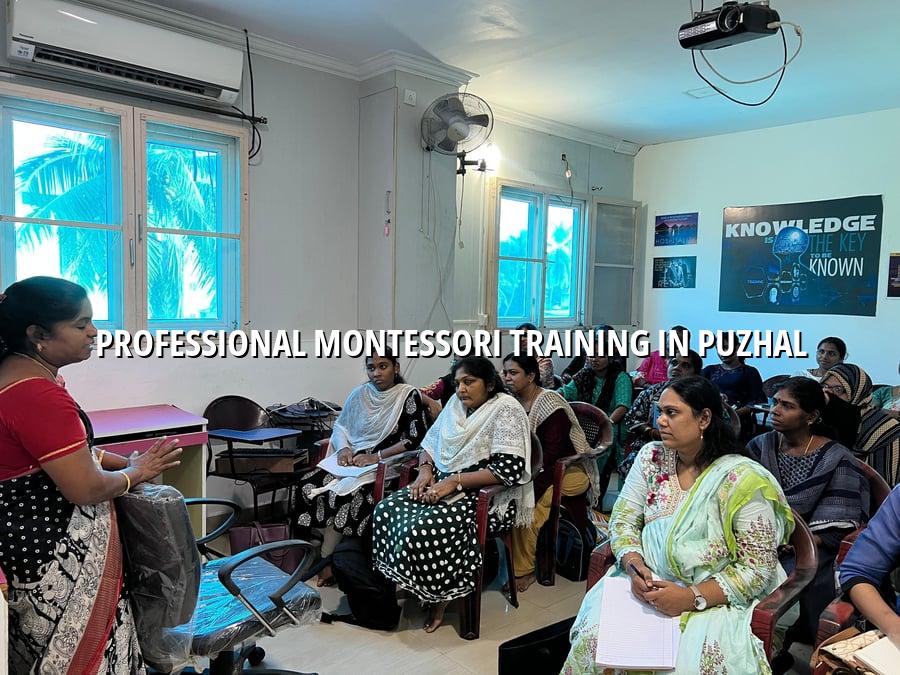
Professional Montessori training in Puzhal helps you build the practical confidence needed to guide young children with real classroom skill, not just theory. If you want a career-focused route into Montessori teaching, this page shows how the training works, what you learn, and how it connects to Chennai school opportunities.
Many learners from Puzhal, Kolathur, Anna Nagar and nearby neighbourhoods look for a course that combines authentic Montessori principles with hands-on practice, flexible batches and support after training. Here you will find a clear breakdown of course structure, classroom methods, internship pathways and the options available through our courses and the online program.
When people search for professional Montessori training Puzhal, they usually want more than a course brochure. They want to know whether the training is practical, whether the certification is respected by preschools, and whether the classes will prepare them for real children in real classrooms. At Super Star Montessori, the focus is on authentic Montessori pedagogy, guided material work, classroom observation and the confidence to lead activities from arrival time to dismissal.
That matters in Chennai because preschools and Montessori houses expect teachers to understand not just the names of the materials, but how to present them, correct gently and create a calm environment. Whether you are beginning after school, returning after a career break or improving your current classroom role, the right training can shape how you teach practical life, sensorial work, language and early mathematics.
A strong Montessori course should move from concept to practice quickly. In Chennai classrooms, a trainee may start by learning how to prepare a work mat, model a pour exercise, observe a child’s concentration, and then move into language and number presentations with proper sequencing. The goal is to train your eye as much as your hands, because Montessori teaching depends on observation, timing and respectful guidance.
One common mistake is choosing a course that only explains principles without enough practical work. Teachers then struggle when they face mixed-age groups, independent activity periods or children who need patient redirection. A practical program helps you see how a lesson flows, how to arrange the environment and how to support children in a way that matches Montessori values while still working within modern preschool expectations.
| Program | Best For | Learning Focus |
|---|---|---|
| Diploma in Montessori Teacher Training | Beginners who want a full professional pathway | Deep Montessori theory, material work and classroom readiness |
| Nursery Teacher Training (NTT) | Those aiming for nursery and preschool roles | Early childhood methods, activities and child-friendly classroom practice |
| Kindergarten Teacher Training (KTT) | Applicants focused on LKG and UKG settings | Age-appropriate planning, stories, songs and foundational learning |
| Online Montessori Course | Learners in Puzhal who need flexible study | Live classes, recorded modules and material kit-based learning |
The strongest programs go beyond a syllabus list and show you how the child experiences the environment. That is why practical life work, sensorial exercises and language progression matter so much. A trainee should know how to introduce spooning, button frames, pink tower work, sandpaper letters, phonetic awareness and early counting in a way that feels natural to the child.
For Puzhal learners, this practical emphasis is useful because it mirrors what schools ask for during interviews and classroom trials. You may be expected to explain how you would manage a mixed-age group, prepare a reading corner or support a child who needs repetition without pressure. Training that includes observation and guided demonstration can help you answer those situations with clarity instead of hesitation.
Montessori training also teaches rhythm: greeting children, presenting work, allowing concentration, closing a lesson and restoring the environment. These routines can seem small, but they are what make a room calm and productive. In many Chennai preschools, teachers who manage transitions well are able to support more meaningful learning because the classroom stays orderly and child-led.
Another frequent gap is ignoring observation skills. New teachers sometimes focus only on speaking clearly or preparing worksheets, while Montessori classrooms require the patience to watch, note and respond. A good institute teaches when to step back, when to guide and how to preserve the child’s independence without leaving them unsupported.
Super Star Montessori offers Montessori, Nursery Teacher Training, Kindergarten Teacher Training, online learning and internship support for learners who want a serious professional pathway from Puzhal and across Chennai. Our programs blend authentic philosophy with modern classroom practice, and the online option is useful if you need to study around work or family commitments. If you want a course that helps you grow with practical confidence and career mentoring, start with our courses or review the online program.
Call +91 90924 63091 or +91 86680 47390, email info@superstarmontessori.com, or chat on WhatsApp.
If you want a broad professional foundation, the Diploma in Montessori Teacher Training is usually the strongest option. If your goal is preschool or nursery roles with a shorter path, NTT or KTT may suit you better. The best choice depends on your schedule, prior experience and the age group you want to teach.
Yes, because many preschools value teachers who understand child-centred learning, classroom organisation and practical material work. Training helps you speak confidently about activities, observation and age-appropriate guidance during interviews. It also gives you a stronger foundation for classroom practice once you begin working.
Yes, the online Montessori course is suitable for learners who need flexibility. It combines live classes with recorded modules and material-kit-based learning, which helps you study from home while staying connected to the trainer. Many students choose this format when weekday travel is difficult.
You will learn how to handle Montessori materials, present lessons, guide children gently and maintain the classroom environment. The course usually covers practical life, sensorial, language, mathematics and cultural areas, along with observation and activity planning. These skills matter because Montessori teaching depends on demonstration and independent child work.
Yes, internship support is part of the institute’s practical training approach, with opportunities linked to partner Montessori houses. This helps learners observe real classrooms and understand daily routines before moving into teaching roles. It is especially helpful for beginners who want more confidence in a school setting.
You can ask for weekday, weekend, fully online or hybrid batch details based on your current commitments. Many learners from Puzhal and nearby Chennai neighbourhoods choose the format that reduces travel and makes steady study possible. A short counselling call is the easiest way to compare your options.