Weekend Montessori course Chetpet is a practical choice for working adults, parents, and school staff who want structured Montessori training without giving up weekday commitments. It gives you a clear route into authentic classroom practice, hands-on material work, and guidance you can use in real teaching settings.
If you are comparing flexible batches in Chennai, this page explains who weekend learning suits, what the training covers, and how to choose a programme that builds confidence rather than theory alone. You will also see how Montessori method, NTT-style support, and classroom observation can fit into a manageable schedule.
A weekend batch is often the most realistic way to build a teaching career when your weekdays are already full. For learners from Chetpet and nearby Chennai neighbourhoods, the main advantage is consistency: you can study regularly, practice with materials, and still keep your current job or family routine intact. A good course should not feel rushed; it should move steadily from philosophy to practice.
In Montessori training, the schedule matters because skill-building happens through repetition. You need time for practical life exercises, sensorial presentations, language work, and math materials, along with observation and lesson planning. Weekend learning gives you that rhythm while still keeping the training approachable for beginners.
Many learners choose weekend Montessori training after spending a few years in school support roles, preschool classrooms, or child-related work. Some are parents who want to return to work with a stronger early childhood qualification. Others are fresh graduates from Chennai who prefer a structured programme that fits around other responsibilities and allows them to learn without a midweek commute burden.
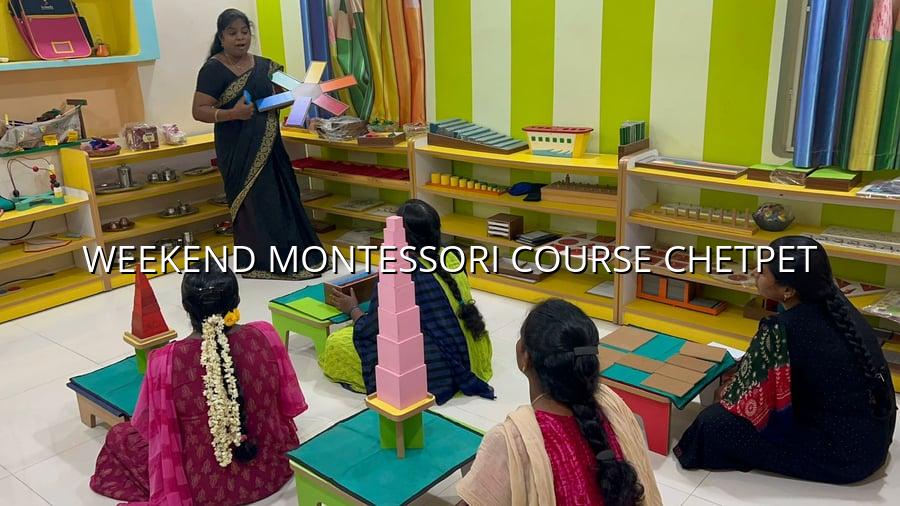
The strongest programmes do not stop at theory notes. They include hands-on practice with Montessori materials, classroom demonstration, observation of teaching methods, and guidance on how to handle children respectfully and confidently. That practical layer is what helps learners move from “I have studied the method” to “I can apply it in a classroom.”
| Training Format | Best For | What You Typically Gain |
|---|---|---|
| Weekend classroom batch | Working adults and busy learners in Chennai | Regular guided practice, peer interaction and live demonstrations |
| Weekend + internship support | Learners who want classroom exposure | Observation, real classroom understanding and teaching confidence |
| Weekend with material work focus | Beginners who need strong foundations | Hands-on familiarity with Montessori apparatus and presentations |
| Weekend plus career mentoring | Those planning preschool or Montessori roles | Resume guidance, interview preparation and job-readiness support |
A quality weekend programme should balance theory, demonstrations, and practice. That means learning how the Montessori environment is prepared, how children are introduced to materials, and why the teacher’s role is to guide rather than dominate. For many Chetpet learners, this balance is what makes the course feel useful from the beginning.
You should also expect the training to touch on classroom routines, age-appropriate activities, and communication with young children. If the institute includes reflective practice, it becomes easier to understand why a child behaves a certain way and how to respond calmly without interrupting the learning flow.
Practical life develops coordination and independence, sensorial work sharpens discrimination, language supports vocabulary and early reading readiness, and mathematics introduces order through concrete materials. Cultural work brings in nature, geography, and simple science ideas, which helps the child connect learning to the world around them. These are the building blocks that make Montessori teaching distinct.
Some learners focus only on course names and ignore the actual teaching method behind them. A weekend batch may sound convenient, but convenience alone is not enough. If the course lacks material practice, child observation, or classroom application, you may finish with notes but still feel uncertain in front of children.
For someone in Chetpet, location can shape whether training stays manageable over several months. A Chennai campus that is accessible from neighbourhoods like Anna Nagar, Kilpauk, Nungambakkam, T Nagar, and other nearby areas makes weekend attendance simpler and more consistent. When travel is realistic, learners are more likely to complete the full programme with focus.
Local training also helps because the examples, classroom expectations, and early childhood work culture often match what you will see in Chennai preschools and Montessori houses. That practical local context can make interview preparation and teaching practice feel more grounded.
Weekend Montessori training can be the starting point for roles in preschools, kindergarten classrooms, and Montessori learning environments. It may also suit learners who are exploring early childhood education as a long-term path and want to move into a more child-focused profession. What matters is not just completing a certificate; it is building the confidence to guide young children with patience and clarity.
When the institute offers internship exposure and career mentoring, you get a better idea of how to translate the training into real opportunities. That support is especially useful if you are returning to the workforce or shifting from another field into education.
Super Star Montessori Teacher Training Institute offers flexible learning options that suit weekend learners, including Montessori, Nursery, and Kindergarten training pathways. If you want a strong practical base, you can also explore our courses, check the online program, or combine learning with internship training for classroom exposure.
Call +91 90924 63091 or +91 86680 47390, email info@superstarmontessori.com, or chat on WhatsApp.
Yes, it is often a practical option for working professionals who cannot attend weekday classes. A well-structured weekend batch lets you learn steadily while keeping your job or other responsibilities in place. The key is to choose a programme with enough hands-on practice, not just classroom theory.
You can expect Montessori philosophy, child development basics, classroom setup, and material presentations across practical life, sensorial, language, and mathematics. Good courses also include observation skills, lesson planning, and guidance for real preschool settings. This helps you connect the method to actual teaching rather than memorising notes.
The duration depends on the programme structure, learning mode, and the amount of practical work included. Many diploma-style Montessori courses run over several months so that learners have enough time for presentations, revision, and teaching practice. A longer schedule can feel easier to absorb, especially for beginners.
Many learners look for exactly that combination because it keeps the training practical. Weekend classes build the foundation, while internship exposure helps you see how children respond in a live classroom. If you want to apply what you learn, ask the institute how observation or internship support is arranged.
No, many learners join as beginners. A good Montessori course starts with the basics and gradually moves into material handling, classroom role, and child-centred practice. Prior experience can help, but it is not usually required to begin training.
Look for clear weekend scheduling, practical sessions, genuine Montessori material work, and support after the course. If the institute also offers counselling, internship guidance, and career mentoring, that is a strong sign it understands learner needs. A short phone call can often tell you whether the batch suits your routine.
For learners in Chetpet who want flexible scheduling without losing the practical side of teacher education, weekend training offers a balanced path forward. With the right institute, you can build strong Montessori foundations, classroom confidence, and a clearer career direction in Chennai.