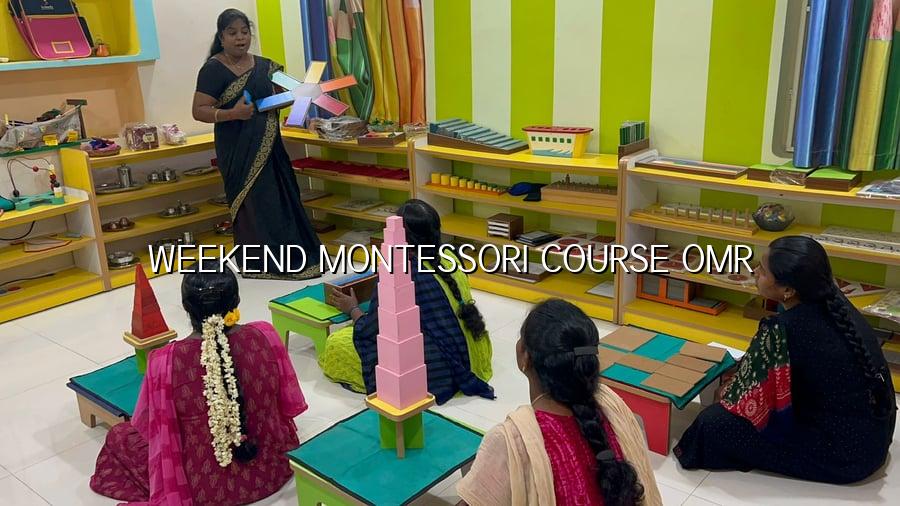
A weekend Montessori course OMR is the practical choice if you want professional teacher training without stepping away from your weekday routine. At Super Star Montessori, you can build real classroom confidence through guided theory, material work and observation that fits around work, family or study commitments.
This route is especially useful for learners in OMR and nearby Chennai neighbourhoods who need a steady schedule and a clear path into early childhood education. The sections below explain how weekend batches work, what you study, how training differs from short workshops, and how to choose a program that supports your long-term career goals.
A strong weekend Montessori course OMR should go beyond slides and theory notes. It should train you to guide practical life activities, sensorial exploration, language development, mathematics and cultural learning in a real Montessori way. That means observing children carefully, presenting materials step by step and understanding why the prepared environment matters.
For Chennai learners, this is where the weekend format becomes valuable. You can keep your weekdays for work or personal responsibilities, then return to a focused training session with enough time to practice lesson presentation, ask questions and reflect on your progress. A well-structured weekend batch also gives you the consistency needed to grow into a confident teacher, not just a certificate holder.
OMR attracts learners from the IT corridor, nearby residential communities and families looking for a serious career switch into education. Weekend classes are easier to sustain than rushed evening sessions because they allow enough time for demonstrations, practice and feedback. If you are balancing a job, childcare or another course, a weekend rhythm can help you complete training with less stress and better focus.
Many people search for Montessori training and expect theory alone to be enough. In reality, employers value teachers who can arrange the shelf, demonstrate material use and understand how to correct a child gently. Practical material handling, lesson planning and classroom observation are what turn a weekend course into usable training. That is why a program with real hands-on work is a better fit than a short overview class.
| Program Type | Best For | Main Learning Focus |
|---|---|---|
| Weekend Montessori Course | Working adults and homemakers in OMR | Montessori philosophy, method, material work and classroom practice |
| Weekend NTT | Learners aiming for nursery or preschool roles | Early childhood basics, activity planning and child engagement |
| Weekend KTT | Those focusing on kindergarten teaching | Foundation skills for LKG and UKG classrooms, routines and lesson delivery |
| Weekend with Internship Support | Learners who want real classroom exposure | Observation, practice teaching and confidence-building in partner settings |
The real value of a weekend course is not the convenience alone; it is the way that convenience supports steady learning. When your training is spread across manageable sessions, you have time to absorb each concept, revisit demonstrations and improve your presentation. That is especially useful in Montessori education, where the teacher’s calmness, precision and preparation directly affect the child’s experience.
Students often find that this format makes it easier to connect theory with everyday teaching situations. For example, a learner may understand the idea of sensorial development in class, then practice the same material presentation on the weekend and later apply it in a preschool setting. That bridge between understanding and action is what creates readiness for real classrooms in Chennai.
One common mistake is choosing a course only because it is nearby or fits your calendar. A good location helps, but the curriculum matters more. If a program skips hands-on work, does not explain the Montessori materials properly or offers little support after class, it may leave you underprepared for actual teaching.
Another issue is confusing a short workshop with a full training pathway. Workshops are valuable for skill refreshers such as storytelling, material-making or classroom observation, but they do not replace a structured teacher training course. If your goal is a teaching career, look for a program that combines clear content, practice and mentor support, not just a quick overview.
Super Star Montessori offers flexible Montessori, NTT and KTT training paths that suit learners who need weekday, weekend, online or hybrid options. If you want a weekend Montessori course OMR with genuine practical exposure, you can also explore our courses, online program and internship training program to see which route matches your goals best.
Our Chennai campus supports learners with hands-on pedagogy, classroom-focused guidance and career mentoring that continues after training. If you are comparing options for OMR or nearby areas such as Velachery, Medavakkam and Pallavaram, speak with our team and choose a path that fits your schedule and teaching ambitions.
Call +91 90924 63091 or +91 86680 47390, email info@superstarmontessori.com, or chat on WhatsApp.
A well-structured weekend course can be a strong route into Montessori teaching if it includes theory, practical material work and guided practice. The key is not the day of the week but the depth of the training, the quality of the curriculum and the support you receive during and after the course.
You should expect Montessori philosophy, child development, classroom preparation, practical life activities, sensorial work, language, mathematics and cultural learning. A good course also includes lesson presentation, observation and guidance on how to handle real classroom situations.
Yes, many learners choose weekend batches because they need to keep their weekday jobs or personal responsibilities. Weekend timing is often more manageable for working professionals, parents and career changers who want steady progress without a full weekday commitment.
A weekend course usually gives you in-person interaction, live demonstrations and immediate feedback on material handling. An online course can offer more flexibility, while a hybrid format may combine both. The best choice depends on how much face-to-face practice you want during training.
Some training paths include internship or observation support, while others offer it as part of a broader program. If classroom exposure matters to you, ask whether the institute provides partner-school observation, guided practice or placement assistance after the course.
Look at the batch timing, travel convenience and the kind of support the institute offers learners from Chennai neighbourhoods such as OMR, Velachery, Medavakkam and Pallavaram. A suitable course should fit your routine and still give you enough practice to build confidence for preschool or Montessori classrooms.