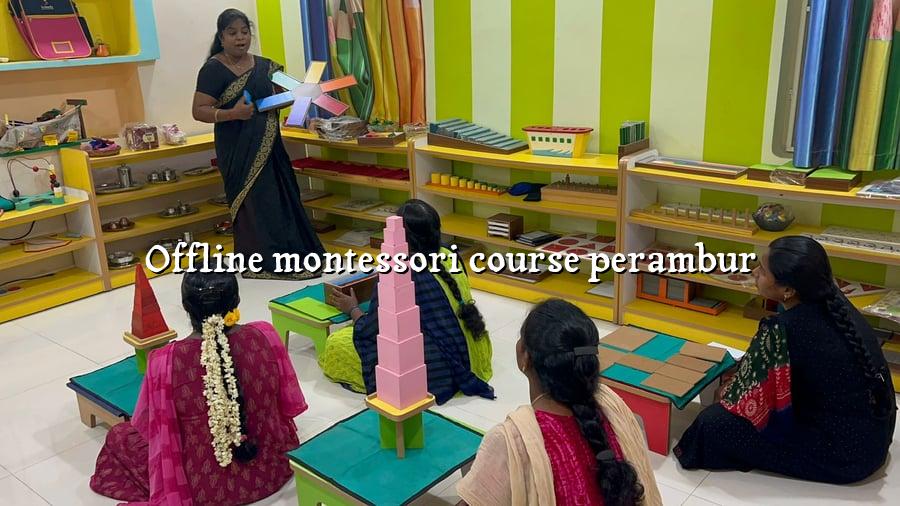
Offline Montessori course Perambur seekers often want one thing first: real classroom practice, not just theory. At Super Star Montessori Teacher Training Institute, this route gives you structured hands-on training, guided observation and a clear path into early childhood teaching.
If you are comparing Montessori training options in Chennai, this page explains how an offline format works, what you learn in a typical diploma pathway, and how to choose a batch that fits your schedule. It also shows where practical Montessori course training connects with internships, workshops and career support for learners from Perambur and nearby neighbourhoods.
A strong offline programme should do more than explain philosophy. It should let you handle Montessori materials, practise presentation steps, observe how children respond and learn how to prepare a classroom that supports independence. That is why many aspirants from Perambur prefer in-person training at a Chennai campus: the work feels real, the feedback is immediate, and the confidence builds faster.
For someone starting from scratch, the right course should connect child development, practical life, sensorial work, language and early mathematics in a way that makes sense. It should also prepare you for the realities of teaching in preschool and kindergarten settings across Chennai, where classroom routines, parent communication and material management matter as much as lesson plans.
Offline classes are valuable because they turn abstract methods into repeatable actions. You do not just hear about the three-period lesson or the pink tower; you handle the material, arrange the presentation sequence and practise the language that helps a child focus. In a well-run Montessori classroom, this repetition matters, and a supervised training room gives you the space to make mistakes, correct them and try again.
Perambur is well connected to many parts of Chennai, so a campus-based schedule can suit learners who want a disciplined routine without depending only on recorded classes. Many trainees are working parents, fresh graduates or career changers who need a clear timetable, peer interaction and faculty correction. An offline format also helps when you want to see how materials are stored, how child-sized furniture is arranged and how a Montessori environment differs from a conventional classroom.
| Training Route | Best For | What You Receive |
|---|---|---|
| Diploma in Montessori Teacher Training | Freshers and career changers seeking a complete foundation | Full syllabus coverage, material practice, observation and teaching practice |
| Nursery Teacher Training | Learners who want early childhood classroom readiness | Foundational child development, activity planning and preschool teaching skills |
| Kindergarten Teacher Training | Those aiming for LKG and UKG classroom roles | Lesson planning, activity-based learning and child engagement methods |
| Practical Workshops | Teachers who want focused skill-building | Material-making, storytelling, classroom observation and presentation practice |
People searching for an offline Montessori course Perambur usually want a course that feels practical from day one. That means learning how to present materials, how to guide the child without overtalking, and how to observe development without rushing to correct every small error. The offline format suits this well because the instructor can watch your movement, posture and sequence, then adjust your technique in real time.
You also learn how the Montessori environment is organised across curriculum areas. Practical life builds order and independence; sensorial refines discrimination; language supports vocabulary and phonetic awareness; mathematics introduces quantity and symbol with concrete materials; cultural work broadens the child’s world. These areas are not taught as isolated topics — they are connected through careful classroom preparation and child-centred presentation.
One frequent mistake is choosing a course only because it sounds flexible, without checking whether it includes material handling or classroom observation. Another is assuming Montessori teaching is simply about keeping children busy with worksheets and crafts. A good offline programme corrects these misunderstandings early, so you learn the purpose behind each material and the reason for each presentation. That clarity is especially useful when you later support children in a preschool or kindergarten setting.
Employers value trainees who can enter a classroom and understand basic routines: how to set up shelves, how to introduce a material, how to speak to young children calmly and how to maintain consistency. Offline training gives you that grounding. It also prepares you for the realities of working with children from Chennai neighbourhoods such as Kolathur, Anna Nagar, Velachery and Tambaram, where families expect both care and professionalism from a teacher.
Super Star Montessori Teacher Training Institute offers offline Montessori learning through structured classroom sessions, practical demonstrations, internship exposure and career mentoring. If you are exploring a course from Perambur, you can also review our course options, compare the flexibility of online training, or add skill-building through practical workshops. The aim is to help you build real teaching confidence and move toward a meaningful early childhood career.
Call +91 90924 63091 or +91 86680 47390, email info@superstarmontessori.com, or chat on WhatsApp.
Yes, beginners can join offline Montessori training even if they have no teaching background. The classroom format is useful because faculty can demonstrate materials, correct your handling and help you build confidence step by step. Many learners start with basic child development knowledge and grow into teaching readiness through practice.
A diploma is a fuller training route with broader coverage of Montessori philosophy, materials and teaching practice. Workshops are shorter and focused on specific skills such as classroom observation, storytelling or material-making. Many students use workshops to supplement a diploma or to refresh one area of practice.
Training length varies by programme and batch format. The flagship Montessori diploma is generally a longer pathway, while NTT, KTT and workshop options may follow shorter timelines depending on the syllabus. The best choice depends on your goal, available time and whether you want a broad foundation or a targeted skill upgrade.
Many learners manage training alongside work by choosing weekend or hybrid schedules when available. If your routine is busy, ask the institute about batch timing, attendance expectations and how practical sessions are organised. That helps you choose a plan that fits your day without losing the benefits of offline learning.
Yes, internship support is a valuable part of professional Montessori training. Classroom exposure helps you understand how teaching happens in real settings, how children behave in groups and how daily routines are managed. It also makes your training more practical and gives you a better sense of the profession before you apply for roles.
Look for clear course structure, authentic Montessori material practice, classroom observation, transparent communication and recognized quality standards. At Super Star Montessori, the institute follows ISO 9001:2015 and ISO 29990:2010 quality standards and focuses on practical teacher readiness. You can also review testimonials and ask for counselling before enrolling.