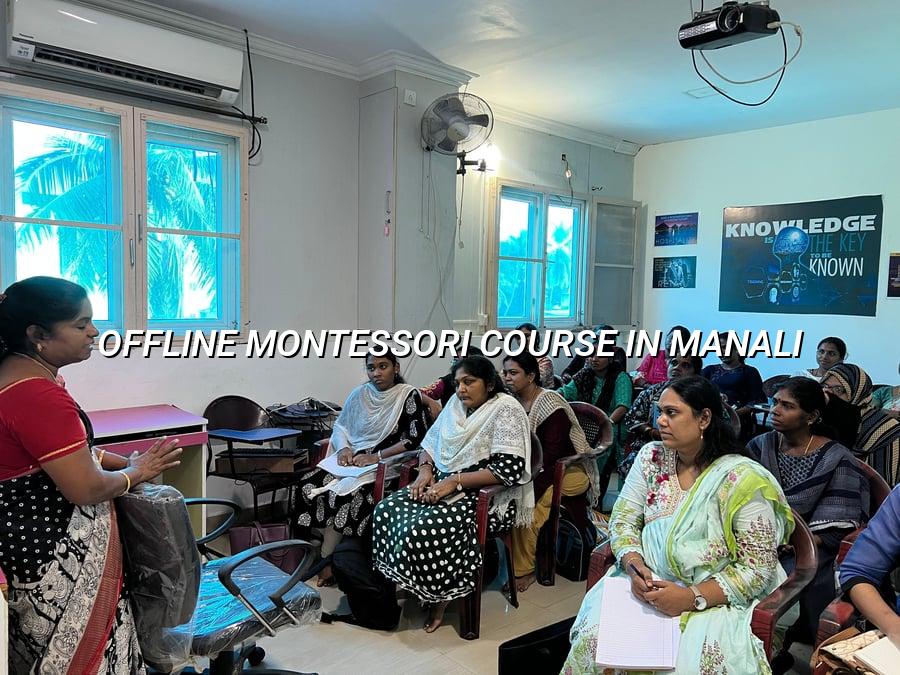
An offline Montessori course in Manali gives you the kind of classroom experience that online videos cannot replace: real material work, live demonstrations and direct feedback from trainers. If you want to teach confidently in preschool settings around Chennai, this page shows how in-person Montessori training builds skill, structure and readiness for the classroom.
This guide is written for school graduates, career changers and working women looking for a practical Montessori teacher training path. You will see what an offline program should include, how to compare learning modes, and why hands-on practice matters for practical life, sensorial, language and early mathematics.
A strong offline Montessori course in Manali should do more than explain theory. It should let you handle the materials, observe child-centered demonstrations, and practice lesson presentation until the method starts to feel natural. For a future teacher, that difference matters because Montessori work depends on precision, rhythm and calm classroom presence. The best training also connects each activity to the child’s stage of development, so you understand not only what to teach but why it is taught that way.
When you physically work with pink tower, knobbed cylinders, sandpaper letters or bead material, the method becomes easier to remember and apply. That is one reason in-person Montessori teacher training is still valued by applicants from Chennai neighbourhoods such as Kolathur, Anna Nagar, Velachery and Tambaram. You can ask questions in the moment, repeat a presentation, and correct your grip, voice and pacing before you enter a classroom. A live setting also helps you notice the small details that matter in Montessori education, such as orderly shelves, child-sized movement and clear transitions between tasks.
Offline training works well for learners who want structure, peer interaction and direct mentor support. It is especially useful if you are planning to move into preschool teaching, kindergarten support or assistant teacher roles after completing your course. Many learners also prefer offline classes because they can build classroom discipline and presentation style through repeated practice rather than self-study alone. If you are comparing options, review the wider course list and see how live learning differs from the online program.
| Training factor | Offline course | Online course |
|---|---|---|
| Classroom practice | Live material handling and supervised presentation | Recorded or live-guided practice from home |
| Trainer feedback | Immediate correction during sessions | Feedback through online interaction and assignments |
| Peer interaction | Regular face-to-face learning with classmates | Virtual interaction through digital classes |
| Best for | Learners who want structured, in-person Montessori preparation | Learners who need flexible study while balancing other responsibilities |
Although your search may begin with Manali, many learners choose Chennai-based institutes because they want established Montessori training, practical exposure and long-term support. A well-designed offline course should help you understand child development, lesson sequencing and classroom management without reducing Montessori teaching to memorised notes. It should also prepare you to speak confidently about the difference between a prepared environment and a traditional classroom, since that is a common interview topic at preschools and kindergarten centres.
For families and learners across Chennai, the decision often comes down to convenience, trainer quality and whether the institute offers real practice. If you live near Ambattur, Mogappair, Porur, Chromepet, Pallavaram, Medavakkam, OMR, ECR or Guduvanchery, you may want a campus-based learning experience that still keeps travel manageable. The Chennai campus model works well when you want a repeatable schedule, in-person mentoring and clear progress milestones.
The best offline Montessori course in Manali should not treat every lesson as separate theory. Instead, it should show how each area supports the child’s independence and concentration. Practical life develops coordination and independence. Sensorial work sharpens discrimination and order. Language lessons build sound awareness, vocabulary and early reading readiness, while mathematics introduces quantity, sequence and concept formation through concrete materials.
Good trainers also explain how cultural work, storytelling and classroom observation fit into a balanced preschool day. If you are entering the field for the first time, this combination gives you a stronger foundation than studying definitions alone. You learn how to guide the child, how to demonstrate movement slowly, and how to step back so the child can work independently.
One mistake many applicants make is choosing a course only because it sounds nearby or appears short. A short title does not guarantee enough practice time, and a nearby classroom does not always mean strong mentorship. Focus instead on whether the institute lets you work with materials, observe real teaching patterns and ask detailed questions about classroom setup, presentation, and child progress.
Super Star Montessori Teacher Training Institute offers authentic Montessori teacher education through practical, mentor-led learning that suits serious learners looking for an offline Montessori course in Manali or across Chennai. You can explore our courses, including Montessori, NTT and KTT pathways, or choose online training if your schedule needs more flexibility. We also support internship exposure and career guidance so you can move from classroom training toward real teaching opportunities with confidence.
Call +91 90924 63091 or +91 86680 47390, email info@superstarmontessori.com, or chat on WhatsApp.
An offline Montessori course in Manali should include live demonstrations, hands-on material work, lesson presentation practice and classroom observation. A strong program also covers practical life, sensorial, language, mathematics and cultural work so you understand the full Montessori framework.
Many beginners prefer offline training because they can physically work with materials and receive immediate correction from trainers. If you learn best through repetition, live feedback and peer interaction, an in-person format often feels more natural.
Course length depends on the program you choose and the learning mode you prefer. Diploma-level Montessori training is generally longer than short workshops, while NTT and KTT pathways are usually designed for quicker career entry with practical classroom preparation.
Yes, many learners travel from areas such as Kolathur, Anna Nagar, Velachery, Tambaram, Porur, Chromepet and Medavakkam for classroom-based training in Chennai. If you want direct mentoring and a structured routine, an offline schedule can fit well with nearby commuting plans.
Montessori teacher training can prepare you for preschool, kindergarten and Montessori classroom roles by building lesson delivery, child observation and classroom organization skills. Many institutes also offer placement support or career mentoring, which helps you present yourself confidently during interviews.
Ask about the syllabus, live practice time, internship support and whether the training includes feedback on presentations. You should also check if the institute explains Montessori philosophy clearly and offers support after course completion, since follow-up guidance can be valuable when you start teaching.